

Quick Summary: A Yoga TTC in Rishikesh covers asana, pranayama, meditation, philosophy, and anatomy. It also covers teaching practice. Many first-time students make the same few mistakes. This guide lists ten common mistakes. It gives a simple fix for each one.
Starting a Yoga TTC in Rishikesh feels exciting. But the first few days can feel confusing too. Many students expect long hours of stretching. They picture perfect postures every day. Instead, they find meditation, philosophy, anatomy, and teaching practice mixed into each day. This surprise often leads to small mistakes. These mistakes make the course feel harder than it needs to be. The good news is simple. Every mistake on this list is common. Every mistake is fixable. Each one is part of the learning curve. This guide walks through ten common errors. It shares easy, practical tips to avoid each one. Your training can feel smooth from day one.
What Mistakes Do Students Make During Their First Yoga TTC in Rishikesh?
Many students think a Yoga TTC in Rishikesh means asana only. Some compare their skill to other students. Some misjudge the daily schedule. Others skip rest, food, or water. A few feel nervous about teaching practice. Success in this course needs steady effort. It needs an open mind. It needs patience with the full process.
Many of these mistakes have a root cause. A student expects one type of course. They end up with a different one. This gap can be closed easily if the student does research before travelling. A brief read like this can save a week of unnecessary stress. These mistakes can be avoided with a bit of preparation.
10 Common Mistakes to Avoid During Yoga TTC in Rishikesh
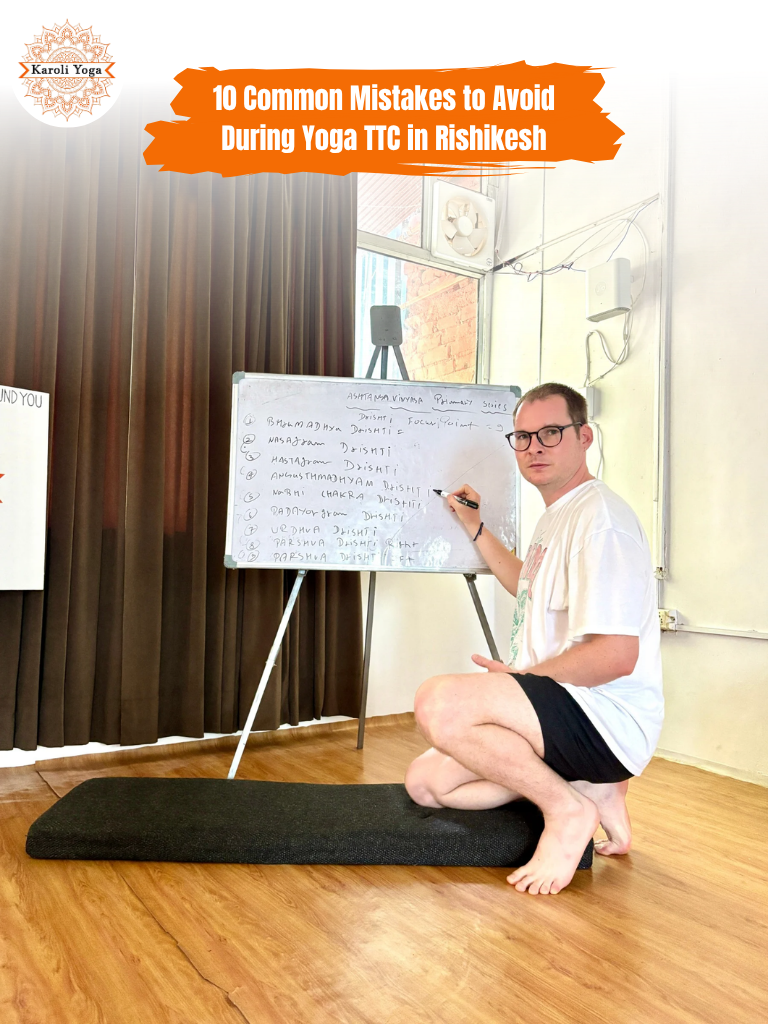
1. Thinking the Course Is Only About Asana
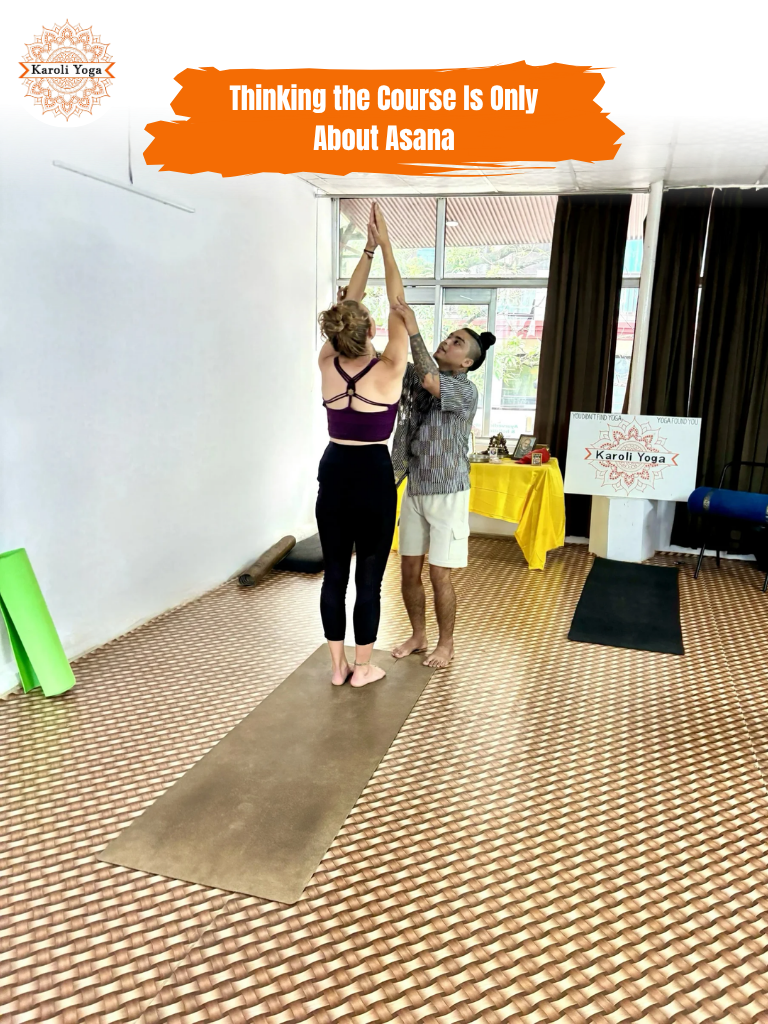
Many students join a Yoga TTC in Rishikesh for asana alone. Asana is only one part of the course. A full course also includes:
- Pranayama
- Yoga philosophy
- Anatomy
- Meditation
- Teaching practice
Each of these subjects has its own class time. Each one plays a real part in the full Yoga TTC in Rishikesh plan.
Students who expect asana only often feel lost. This happens once philosophy or anatomy class begins. This is common in the first few days.
Here are some guidelines to avoid these mistakes in Rishikesh
Read the full plan first. Give each subject equal focus. Philosophy, anatomy, and meditation matter as much as asana. Set aside your own bias toward physical class before you arrive. Look at the printed timetable and note each subject by name.
Many past students say this shift helped a lot. They stopped rushing through study time. Slower classes began to feel just as useful as a hard asana session. Some even say the theory classes became their favourite part of the course by the final week.
2. Comparing Your Progress to Other Students

Every class has students at different levels. Some students have practised yoga for years. Others are complete new students. This mix can make new students feel behind.
This can show up as:
- Feeling unsure during group practice
- Staying quiet during group talk
- Rushing through personal practice
- Feeling low after a hard class
None of these feelings reflects true skill. They are common in the first few days of any Yoga TTC in Rishikesh.
Progress looks different for each student. A slow pace in week one says little about week three.
Here are some guidelines to avoid these mistakes in Rishikesh
Track your own progress each day. Skip the urge to compare. Many strong graduates of a Yoga TTC in Rishikesh started as complete beginners.
Keep a short note of one small win each evening. This habit builds real confidence over time. Small wins, tracked daily, add up to a strong sense of progress by the end of the course.
3. Misjudging the Daily Schedule
A Yoga TTC in Rishikesh follows a full daily schedule. It is not a relaxed schedule. Most days start early, before sunrise. Class often runs late into the evening too. A typical day may include:
- Morning pranayama or meditation
- Asana practice
- Philosophy class
- Anatomy class
- Lunch and rest
- Evening practice or teaching class
Reading the schedule feels easy. Living by the schedule can feel hard at first. Many students feel tired in the first three days. This tiredness is normal and fades fast.
Here are some guidelines to avoid these mistakes in Rishikesh
Shift your sleep time a few weeks early. Treat the course as full-time work, not a light task. This one shift makes a Yoga TTC in Rishikesh feel far less tiring. Practice waking before sunrise at home first, so the body already knows the new clock.
A short rest after lunch can help too. Ten quiet minutes can lift your energy fast. Many students build this short nap into their free hour without any trouble. Over a full course, this one habit alone can prevent most afternoon fatigue.
4. Not Preparing the Body Before Arrival
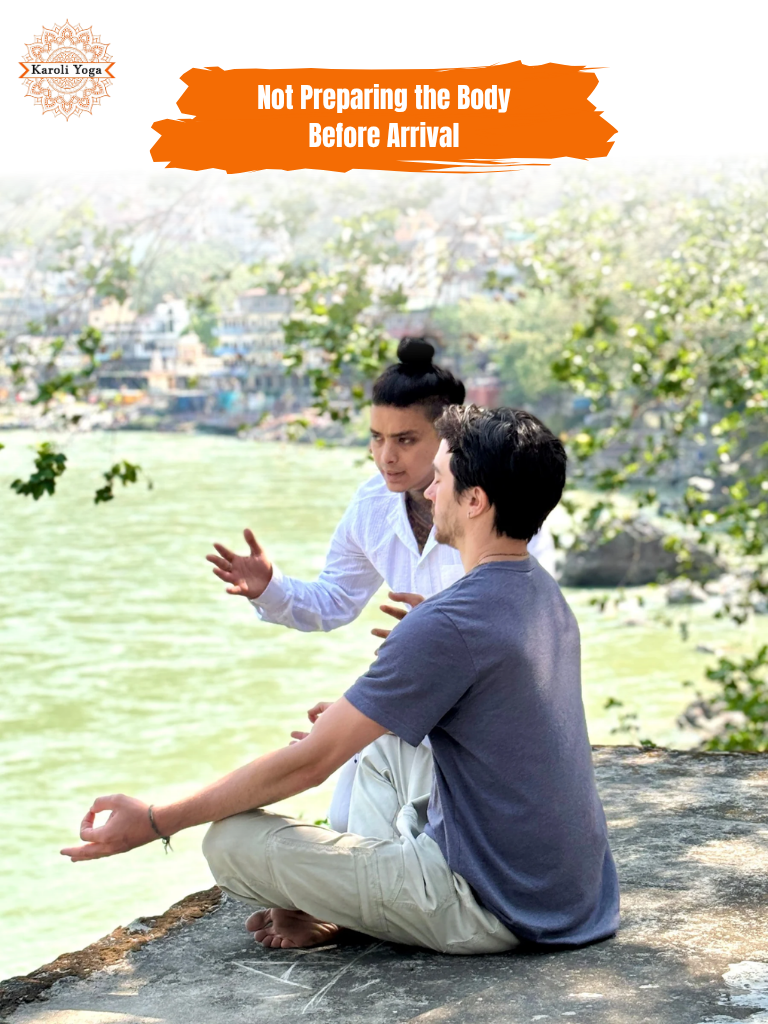
A Yoga TTC in Rishikesh needs no advanced skill to join. Many students start with no yoga background. But an inactive body can feel sore in week one. This soreness is a normal part of adjusting to new, daily movement.
This is common if your daily life at home lacks much movement. A body that sits still most days needs a slower start.
Here are some guidelines to avoid these mistakes in Rishikesh
Start light moves two weeks early. Add short stretches each day. Add slow breath drills too. These small steps help the body adjust fast. A gentle daily habit works better than one long, hard session right before you fly.
Sitting on the floor each day also helps. It makes floor-based class time feel less stiff. Even ten minutes on the floor each evening, while reading or resting, can loosen tight hips before the course even starts.
5. Skipping Rest, Water, and Food
Many students push hard from day one. Rest gets ignored in the process. This pattern shows up fast in a full Yoga TTC in Rishikesh. Without enough sleep, water, and food, tired feelings build up fast.
Common signs of poor rest include:
- Muscle soreness that does not go away
- Frequent headaches
- Low mood
- Trouble focusing during class
Some students think they are simply unfit. In most cases, the real issue is poor rest. A short change in routine often fixes the problem within a day or two.
Here are some guidelines to avoid these mistakes in Rishikesh
Make rest a daily habit. Drink water often. Eat every meal. Sleep early when you can. Stretch gently after class. Rest is part of the training, not a break from it.
Keep a water bottle close in every class. Sip often, even before you feel thirsty. This one habit can fix most tired days in a busy Yoga TTC in Rishikesh.
6. Feeling Nervous About Teaching Practice
Teaching practice makes many students nervous. This is common for students who joined to improve their own practice alone. Speaking in front of a group can feel hard. Getting feedback in front of others can feel harder still. This fear often peaks in the first teaching session and eases after that.
Common worries include:
- Speaking clearly during class
- Giving cues without stopping
- Showing a pose in front of others
- Making a mistake in public
- Hearing direct feedback from a teacher
None of these worries reflect real skill. They fade fast with repeat practice.
Here are some guidelines to avoid these mistakes in Rishikesh
Treat teaching time as plain practice, not a test. Take feedback as a tool, not blame. Fear fades fast with more practice. Most students feel far more at ease by their third or fourth turn.
Try three slow breaths before each turn to teach. This small pause can calm your nerves fast in any Yoga TTC in Rishikesh class.
7. Treating the Course Like a Vacation
Rishikesh is a calm and pleasant town. It is easy to want to explore it during the course. Many cafes and quiet spots sit near the river. But a Yoga TTC in Rishikesh needs steady focus. It leaves little room for late nights and long outings during class days.
Students who spend too much time outside class often feel tired during morning practice. This drain builds up fast across a full course.
Here are some guidelines to avoid these mistakes in Rishikesh
Save trips for free hours only. Save long trips for after the course. Keep class time as your top goal. Set a simple rule for yourself before you arrive, such as one short outing per week, not one per day.
A short walk near the river still fits well. Save the longer trips for after graduation. This small trade-off protects your energy for the early morning classes, which tend to matter most for real progress.
8. Expecting Fast Results in a Loose Body
Some students expect advanced poses within a few days. This hope often leads to upset feelings. The body often feels tighter, not looser, in week one of new practice. This tightness usually eases within the first ten days of steady practice.
Real progress in a Yoga TTC in Rishikesh shows up in other ways, such as:
- Steadier breath during practice
- Better posture
- More patience while holding a pose
- Better focus during class
None of these signs looks bold in a photo. Each one still counts more than pose depth.
Here are some guidelines to avoid these mistakes in Rishikesh
Judge growth by breath and posture. Do not judge it by pose depth. Slow, steady gains beat a rush. A calm breath under strain is a better sign of progress than a deep backbend held for one photo. Keep a note on how a pose feels.
Over time, this shows steady growth in your Yoga TTC in Rishikesh. Reviewing these notes at the end of each week often reveals progress that felt invisible on any given day.
9. Giving Less Importance to Philosophy and Meditation
Many students focus mainly on asana class. Philosophy and meditation classes often get less attention. This is a missed chance. Some students only realise this after the course ends.
These subjects often bring the most personal growth in a Yoga TTC in Rishikesh. Philosophy explains the purpose behind the practice. Meditation teaches patience with a busy mind. Both classes often stay with a student long after the course ends.
Here are some guidelines to avoid these mistakes in Rishikesh
Take notes in each theory class. Ask more questions on new topics. Stay open, even when ideas feel strange. Sit through a quiet meditation block without reaching for a phone, even when the silence feels uncomfortable at first.
Write down one new idea each night. Over a full course, this builds a rich record. Many students later say these small notes became the most useful part of their notebook once the course ended.
10. Not Trying the Yogic Lifestyle
A Yoga TTC in Rishikesh also shapes daily habits outside class. Meals become simple and sattvic. Screen time is often reduced. Students may share rooms with people from other countries. These changes can feel strange at first. Most students adjust within the first week.
The yogic lifestyle often includes:
- Early wake-up times
- Sattvic meals
- Less phone use
- Shared living spaces
- New sleep habits
Each shift feels small on its own. Together, they shape the full spirit of a Yoga TTC in Rishikesh.
Students who fight this lifestyle often miss a valuable part of the training. This part often means the most by the end of the course.
Here are some guidelines to avoid these mistakes in Rishikesh
Try each new habit with an open mind. Give it a few days first. This lifestyle often becomes the best part of a Yoga TTC in Rishikesh. Judge a new habit only after a fair trial, not after the first uncomfortable morning.
Early nights feel odd on the first evening. They settle into something calm by day three. Many graduates later admit these small daily rituals, not the asana class, are what they miss most once the course ends and daily life resumes.
Who Should Join a Yoga TTC in Rishikesh?
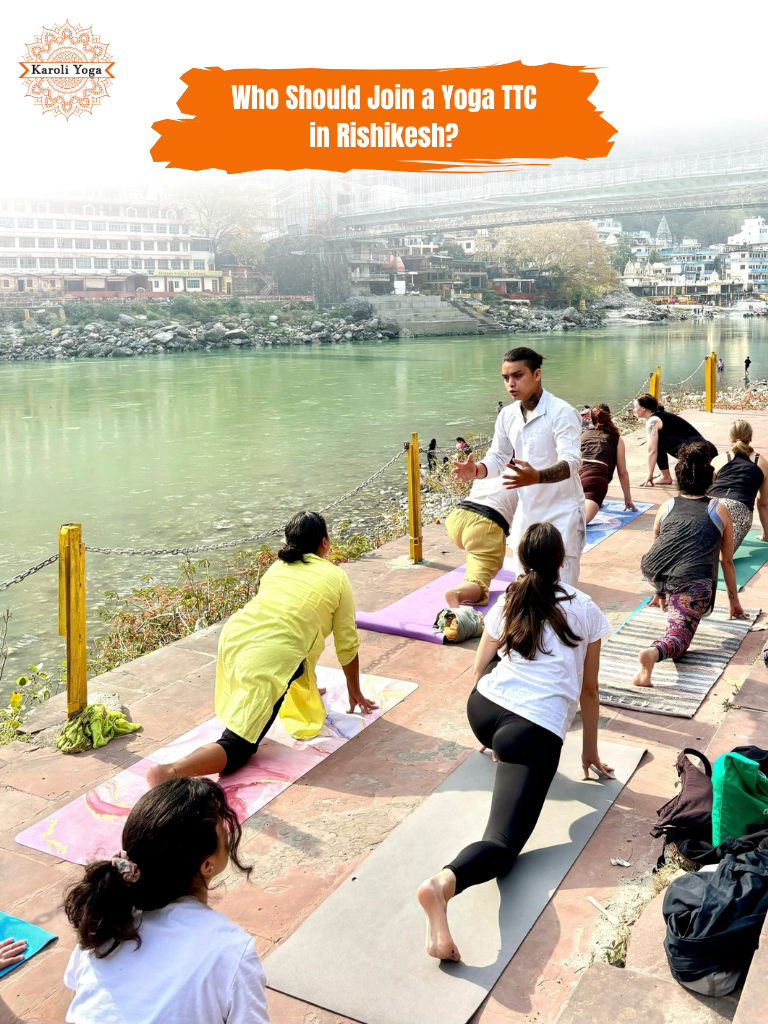
There is no fixed skill needed to join. New students and skilled yoga students can join the same course. What matters most is a real wish to learn. Some students join a Yoga TTC in Rishikesh to deepen their own practice. Others join to become certified teachers. Both goals are welcome in the same class.
How to Prepare Before Your Yoga TTC in Rishikesh
A little prep work helps a lot. It helps you feel calm from the very first day. Before you travel, try to:
- Practice basic yoga for fifteen minutes, most days
- Adjust your sleep schedule closer to sunrise
- Read a little about yoga philosophy
- Pack soft clothes and a notebook
- Let go of hopes about a deep bend
- Accept that mild soreness is normal
You do not need advanced skill to join. You need a real wish to learn during your Yoga TTC in Rishikesh. This one trait matters more than any other on your packing list.
Explore Our Training Programs
Course length counts as much as mindset for a Yoga TTC in Rishikesh. Karoli Yoga School has a 100 Hour Yoga Teacher Training Course in Rishikesh for new starters. There is also a 200 Hour Yoga Teacher Training in Rishikesh for a full Yoga Alliance mark. A 300 Hour Yoga Teacher Training in Rishikesh suits skilled students who want more depth. Each length uses the same tips in this guide.
Choosing between these options depends mainly on your goal. A shorter course suits a student testing the waters. A longer course suits a student ready for full certification. Our team can help match the right length to your own plan.
Common Signs You Are Making One of These Mistakes
A few simple signs point to these mistakes early. Feeling drained by day three is one sign. Skipping meals or water often is another. Avoiding theory class or teaching drills is a third sign. Noticing one of these signs is not a problem. It is simply a cue to adjust one habit in your Yoga TTC in Rishikesh. Small, early changes usually fix these signs within a day or two. Most students who catch these signs early finish the course feeling far stronger than they expected.
What a Typical Week One Feels Like
Week one often feels like the hardest part of the course. The body still adjusts to new hours. The mind still adjusts to new subjects. Small aches show up in places that rarely get used. Sleep may feel lighter than usual in a new bed. None of this points to a bad fit for the course.
By day four or five, most students report a shift. Morning wake-ups start to feel less harsh. Poses that felt stiff on day one start to feel smoother. Study blocks start to feel interesting rather than tiring. This shift is common across most batches, no matter the season.
Staff at most schools expect this early dip in energy. Teachers often plan lighter demands for the very first days. This gives new students room to adjust without falling behind on the full plan. Most schools build this buffer into the very design of the course.
Small Habits That Make the Biggest Difference
A few small daily habits tend to matter more than any single big decision. Waking a few minutes early gives room to stretch before class. Laying out clothes the night before saves rushed mornings. Keeping a small journal helps track daily wins and lessons. None of these habits takes much time or effort.
Students who build two or three of these habits early often report less stress overall. The habits do not need to be perfect from day one. Small, steady use over many days brings the real benefit. Even one new habit, kept for a full week, can shift the tone of the entire course.
Why You Should Join This Yoga TTC in Rishikesh
Rishikesh feels like a true ashram. The town sits beside the holy Ganga River. This calm setting helps practice feel deep and real. A few things make this training special:
- Rishikesh has an ashram-like feel, with the Ganga close by. This builds a calm, sacred mood for practice
- Classes include mantra study. This helps build calm energy and a clear aura
- Teachers here value traditional methods more than modern shortcuts
- Every meal is sattvic, simple, and good for a clear mind
These small details add up fast. They shape a training that feels calm and complete.
Why This List Helps New Students
Most mistakes on this list come from one cause. Students expect a different course than what they get. Once a student knows the real plan, worry drops fast. A calm mind learns faster than a stressed mind. Keep this list in mind before you travel for your first Yoga TTC in Rishikesh.
This list can also help mid-course. If a week feels hard, review these ten points again. One small change often helps quickly. Many past students say a quick re-read mid-course brought back their early focus.
Quick Recap: Stay Ready for Your Yoga TTC in Rishikesh
Keep these points in mind throughout the course:
- Drink water often
- Sleep on time
- Eat full meals
- Stretch after class
- Stay open during theory class
- Ask questions
- Focus on your own progress
Small habits build a smooth Yoga TTC in Rishikesh. Keep the routine simple and steady. A calm student takes in more than a rushed one.
Conclusion
Your first Yoga TTC in Rishikesh can be a rewarding time. A few mistakes along the way are normal. Most students who struggle are not unprepared. They simply expected a different kind of course. Once a student knows the daily routine, the course feels easier to enjoy.
Every course brings new faces from different backgrounds. Some come with years of practice. Others start with no yoga skill at all. Teachers adjust each class to fit the group in front of them. This flexible teaching style helps most students settle in faster than they expect.
Every batch includes students with different goals and skill levels. One thing stays true for most students. Steady effort and an open mind matter more than a naturally loose body in a Yoga TTC in Rishikesh. This holds for every batch, past and future.
At Karoli Yoga School, students from many countries join our courses each month. A little prep work can improve the whole course. Even a small change, made two weeks before travel, can shift the entire first week for the better. Message us on WhatsApp with any questions about our courses or dates. Our team is glad to help you plan a course that fits your goals. You can also follow us on Instagram and Facebook for more yoga tips.
Frequently Asked Questions
Q1. How long does it take to feel settled in a Yoga TTC in Rishikesh?
Most students feel settled by day four or five. The body adjusts to early mornings first. The mind adjusts to theory and meditation soon after. A Yoga TTC in Rishikesh feels far smoother once this early adjustment period passes.
Q2. What happens if I miss a class due to illness or fatigue?
Most schools allow a short rest when a student feels unwell. A Yoga TTC in Rishikesh usually has some flexibility built into the schedule for this. Speak with a teacher early, rather than pushing through a class while unwell.
Q3. Can I take a Yoga TTC in Rishikesh if I have never taught anything before?
Yes. Teaching skill is built during the course itself, not before it. A Yoga TTC in Rishikesh is designed to take a student from zero teaching experience to a confident first class by graduation.
Q4. Do I need to know Sanskrit or Hindi to join a Yoga TTC in Rishikesh?
No. Most classes run in English at schools that welcome international students. A Yoga TTC in Rishikesh may use a few Sanskrit terms for poses and philosophy, but these are explained clearly in class.
Q5. Is a Yoga TTC in Rishikesh worth it if I never plan to teach?
Yes. Many students join a Yoga TTC in Rishikesh purely to deepen their own practice. The philosophy, anatomy, and meditation lessons carry real personal value, whether or not a student ever leads a class afterward.