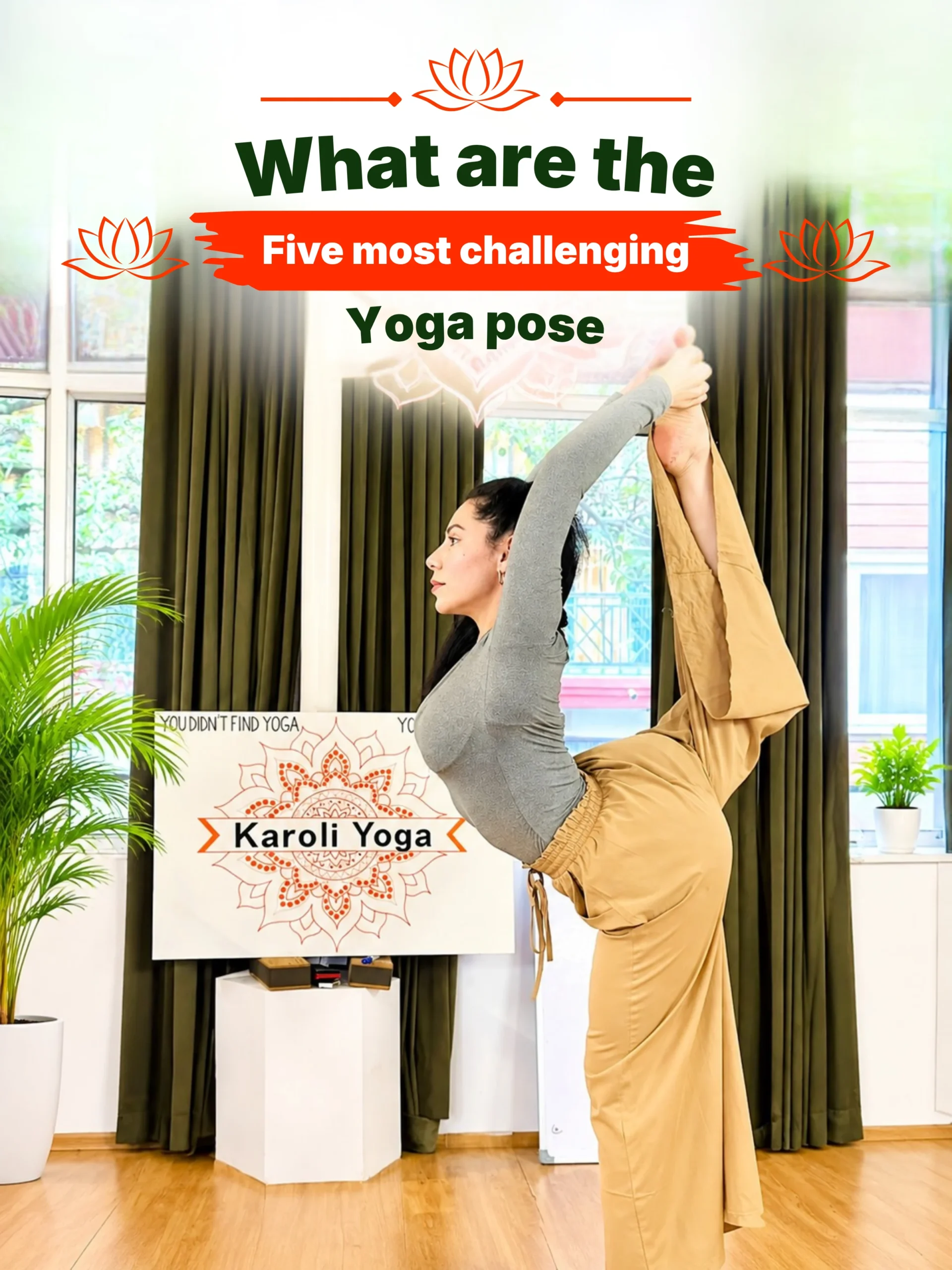
Quick Summary: The five most challenging yoga poses are Vrschikasana (Scorpion Pose), Adho Mukha Vrksasana (Handstand), Astavakrasana (Eight-Angle Pose), Mayurasana (Peacock Pose), and Eka Pada Rajakapotasana (King Pigeon Pose). Each one needs strength, flexibility, balance, and calm focus. Build up slowly, use a wall or a teacher, and stop if you feel pain.
Ever watched someone float into a handstand and thought, “No way”? You are not alone. Some poses look like magic. They ask for strength, balance, flexibility, and a calm mind, all at once. That is why they can take months or years to learn. This guide covers five of the most Challenging Yoga Poses you will meet: Scorpion, Handstand, Eight-Angle, Peacock, and King Pigeon. You will learn what each pose needs, why it feels so hard, and how to prepare step by step. Safety comes first, so we also share simple rules to protect your wrists, back, and knees. Ready to see what your body can grow into? Do not worry; we go step by step. Let us begin.
Why Do Some Yoga Poses Feel So Hard?
Difficulty isn’t just about being bendy. Most Challenging Yoga Poses mix several skills. One missing skill can stop the whole pose. Fear plays a part too. Here are the usual reasons:
- Strength in the wrists, shoulders, and core
- Flexibility in the hips, spine, or shoulders
- Balance on a small base
- Body control, such as twisting and lifting together
- A calm mind that stays steady under stress
Which Are the 5 Most Challenging Yoga Poses?
This table gives a quick look at all five. Each pose is explained in detail below.
| Pose | English Name | Main Challenge | Skills Needed |
| Vrschikasana | Scorpion Pose | Deep backbend in a forearm balance | Shoulder strength, spine flexibility |
| Adho Mukha Vrksasana | Handstand | Balancing on the hands | Wrist, shoulder, and core strength |
| Astavakrasana | Eight-Angle Pose | Twist plus arm balance | Hip opening, core, arm strength |
| Mayurasana | Peacock Pose | Balancing on the elbows | Wrist, forearm, and core strength |
| Eka Pada Rajakapotasana | King Pigeon Pose | Deep backbend plus hip opening | Open hips, thighs, shoulders, spine |
1. Vrschikasana (Scorpion Pose)
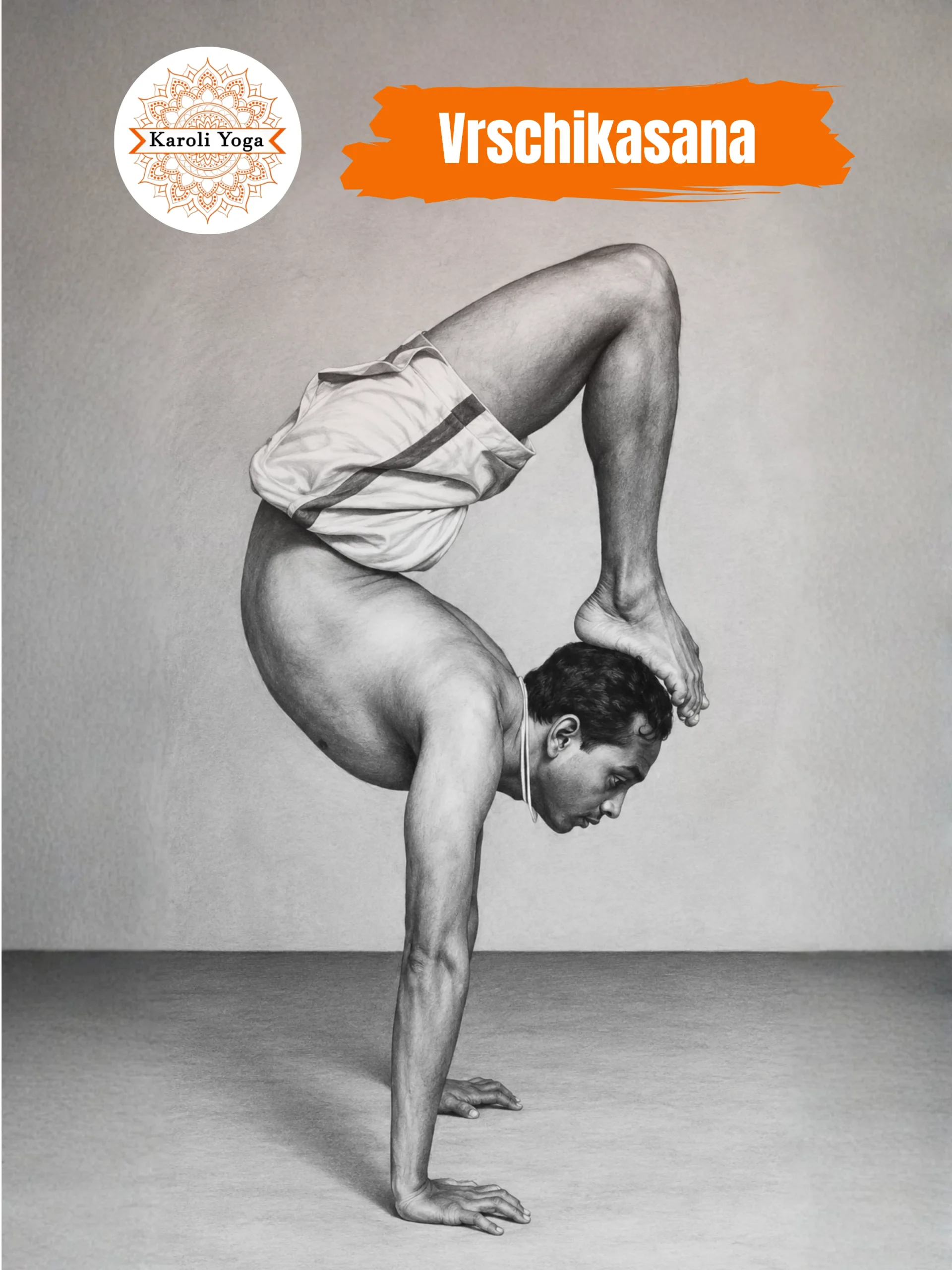
Scorpion is a forearm balance with a deep backbend. Bend the legs and reach the feet toward the head. It joins an inversion with spine flexibility, so it ranks near the top of any list of Challenging Yoga Poses.
- Needs a steady forearm balance first
- Needs open shoulders and chest
- Needs a flexible spine
- Needs calm breathing upside down
Go slowly with the lower back and neck. Practise at a wall until the balance feels easy.
2. Adho Mukha Vrksasana (Handstand)
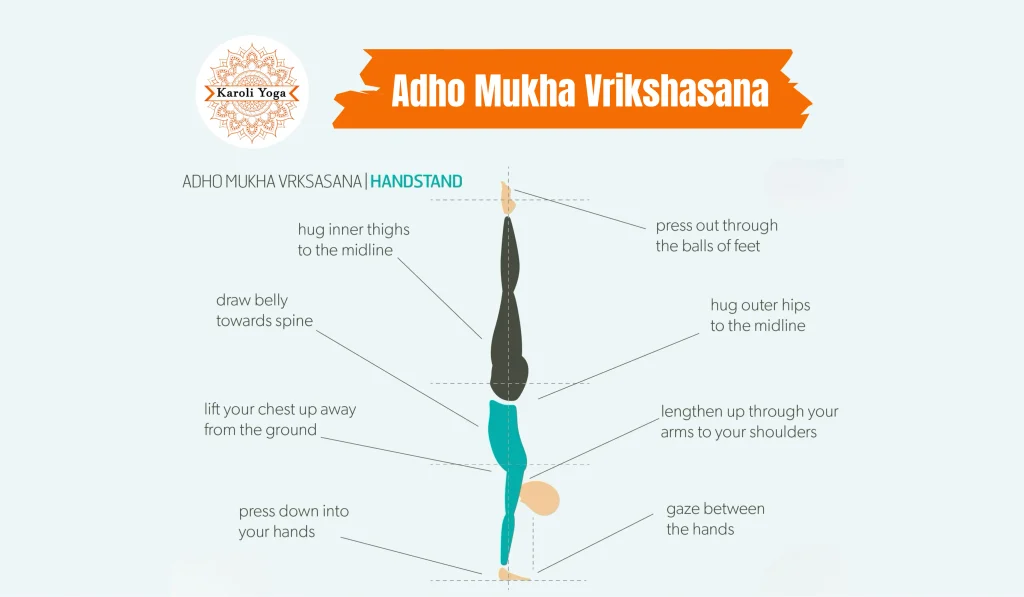
Handstand means balancing on your hands with the body upside down and long. It looks simple, but this pose asks a lot from the wrists, shoulders, and core. That makes it a classic among Challenging Yoga Poses. Fear of falling is often the biggest block.
- Strong, warm wrists
- Stable shoulders
- A tight, active core
- A safe way to come down, such as a step or a cartwheel out
Practise at a wall. Never try it on a slippery floor. Skip it if you have:
- Wrist, neck, or shoulder pain
- High blood pressure
- Eye pressure problems
3. Astavakrasana (Eight-Angle Pose)
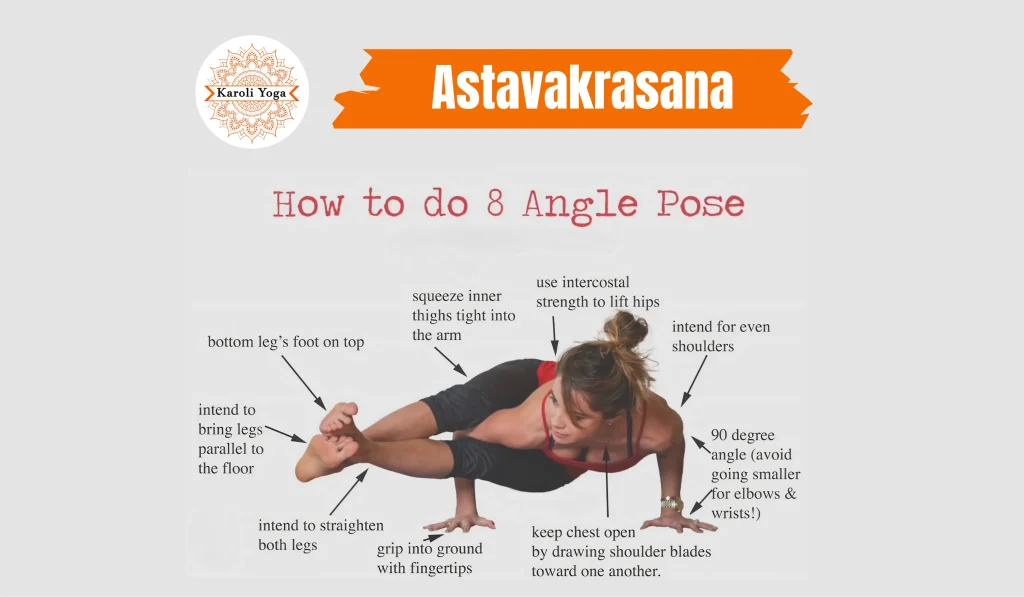
This arm balance is named after the sage Ashtavakra. Tradition says the sage was born with eight bends in the body. In the pose, your legs hook around one upper arm. Your body twists, and your legs stretch out to the side.
It stands out among Challenging Yoga Poses because it mixes three tasks:
- You twist the torso
- You hook a leg around the arm
- You balance on the hands
That takes open hips, flexible hamstrings, and strong arms. Start with simple arm balances before you try it.
4. Mayurasana (Peacock Pose)
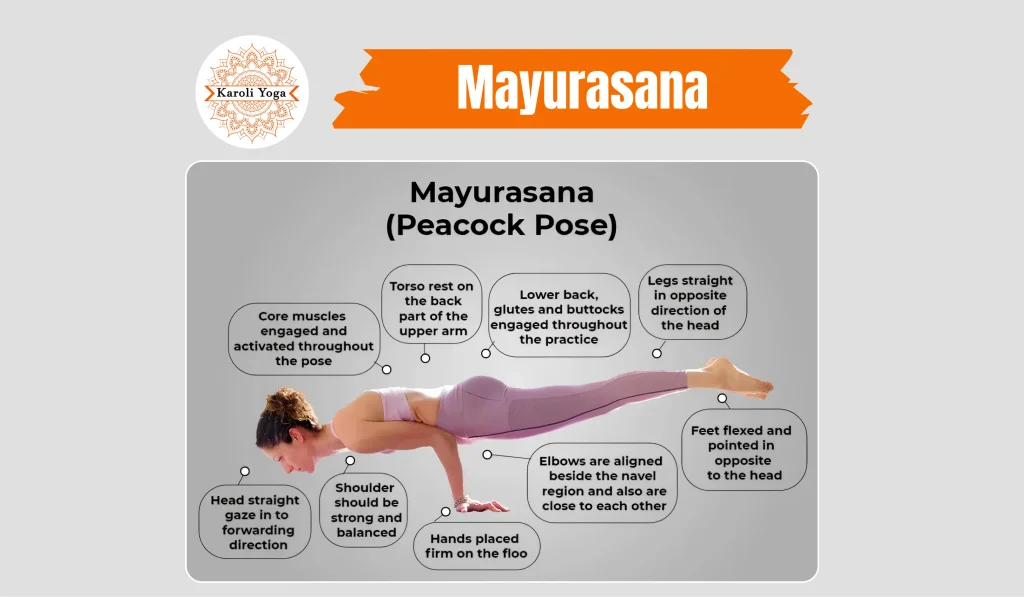
In Peacock, your palms press down with the fingers pointing back toward the feet. The elbows press into the belly. Then the whole body lifts and stays level like a plank above the floor.
- The wrists must turn and carry your weight
- The forearms and core must work together
- The belly takes strong pressure
Tradition links this pose to digestion. Modern proof is limited. Skip it:
- After meals
- During pregnancy
- With a hernia or abdominal problems
- With a wrist injury
5. Eka Pada Rajakapotasana (King Pigeon Pose)
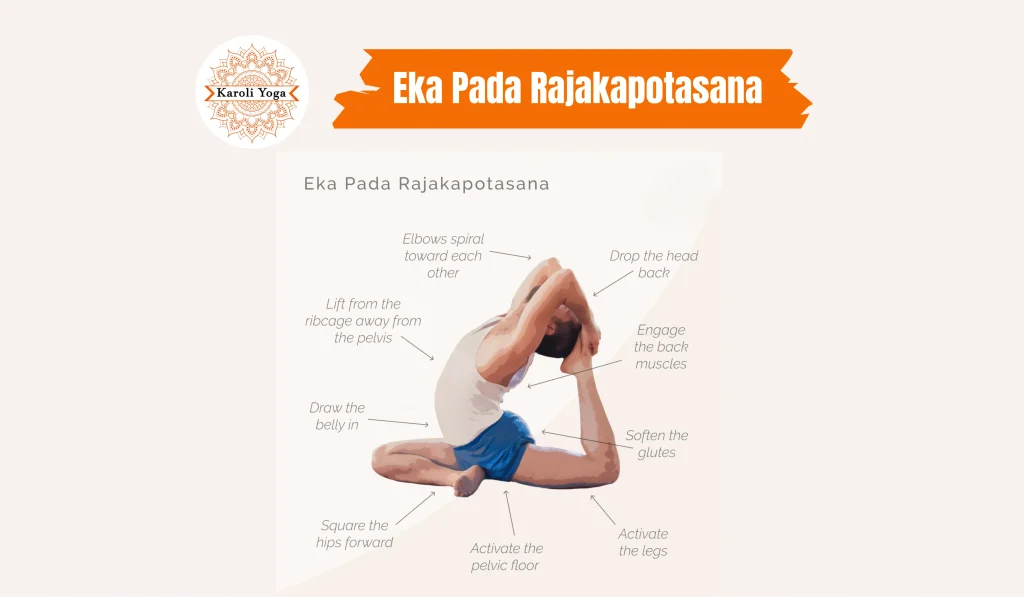
King Pigeon is a deep backbend and a hip opener in one. One leg folds in front. The back knee bends, and the foot reaches toward the head. Many teachers call it an advanced posture because it needs very open shoulders, spine, and hips.
Knees, hips, and lower back take the load. Keep these tips in mind:
- Warm up the hips and thighs well first
- Use a strap or a block to bridge the gap
- Skip it with knee pain or lower back pain
How Can You Prepare for Challenging Yoga Poses?
Do not jump straight into the full shape. Build the base first. This plan shows where to start for each of the Challenging Yoga Poses.
| Pose | Start With | Then Try |
| Vrschikasana | Dolphin Pose, forearm balance at a wall | Camel, Bow |
| Handstand | Downward Dog, Plank, wall walks | L-shape at a wall |
| Astavakrasana | Crow, Side Crow | Hip openers, hamstring stretches |
| Mayurasana | Crow, wrist warm-ups | Plank with the fingers turned back |
| King Pigeon | Pigeon, Low Lunge | Camel, Bow |
Follow these simple habits:
- Practise three or four times a week
- Hold each prep pose for five slow breaths
- Rest one day between hard sessions
Progress comes from small, regular steps.
What Safety Rules Matter Before You Try Challenging Yoga Poses?
Hard poses carry more risk. A few simple rules keep you safe:
- Warm up the wrists, shoulders, hips, and spine for at least ten minutes
- Use a wall, blocks, or a spotter
- Learn from a trained teacher first
- Stop at once if you feel sharp pain
- Never force a pose to match someone else
- Skip upside-down poses with high blood pressure or when pregnant, unless a doctor agrees
What Do You Gain From Challenging Yoga Poses?
The shape matters less than the skills you build on the way. These benefits accompany regular Challenging Yoga Poses practice:
- Improved wrist, shoulder and core strength
- Improved body control and balance
- Greater hip and back freedom of movement
- More attention and control while breathing
- More patience and confidence
Conclusion: Are You Ready to Try Harder Poses?
The five Challenging Yoga Poses in this guide are goals, not tests. They teach strength, balance, patience and calm. Build the base, practise with care, and enjoy each small win along the way. The pose will come when your body is ready.
At Karoli Yoga School in Tapovan, small classes mean each student gets real care and help while building these skills. You can begin with a 100 Hour Yoga Teacher Training Course in Rishikesh, grow in a 200 Hour Yoga Teacher Training in Rishikesh, or go deeper with a 300 Hour Yoga Teacher Training in Rishikesh. Prefer a short stay? Join one of our Rishikesh Yoga Retreats.
Have questions about Challenging Yoga Poses, our courses, or upcoming dates? Message us on WhatsApp. Our team is happy to help.
You can also follow us on Instagram and Facebook for more yoga tips.
Frequently Asked Questions
1. What is the most complicated yoga pose?
No single pose wins, since difficulty depends on your body and skill. Many teachers name Vrschikasana among the hardest Challenging Yoga Poses because it joins balance, strength and a deep backbend.
2. What is the most challenging yoga class?
Fast and long classes, like Ashtanga Primary Series and power vinyasa, often feel toughest. A class full of Challenging Yoga Poses such as arm balances and inversions is very demanding too.
3. What is the most powerful yoga pose?
Power depends on your goal, but many teachers pick Handstand for the strength and focus it builds. It sits high on any list of Challenging Yoga Poses.
4. What are the benefits of difficult yoga poses?
They build strength, balance, flexibility and focus. Challenging Yoga Poses also teach patience, since progress comes slowly.
5. What is a Cleopatra pose?
Cleopatra is a modern studio name, not a classical asana, so the shape varies by teacher. Some classes use it for a hip and glute stretch; others for a neck and shoulder release.