
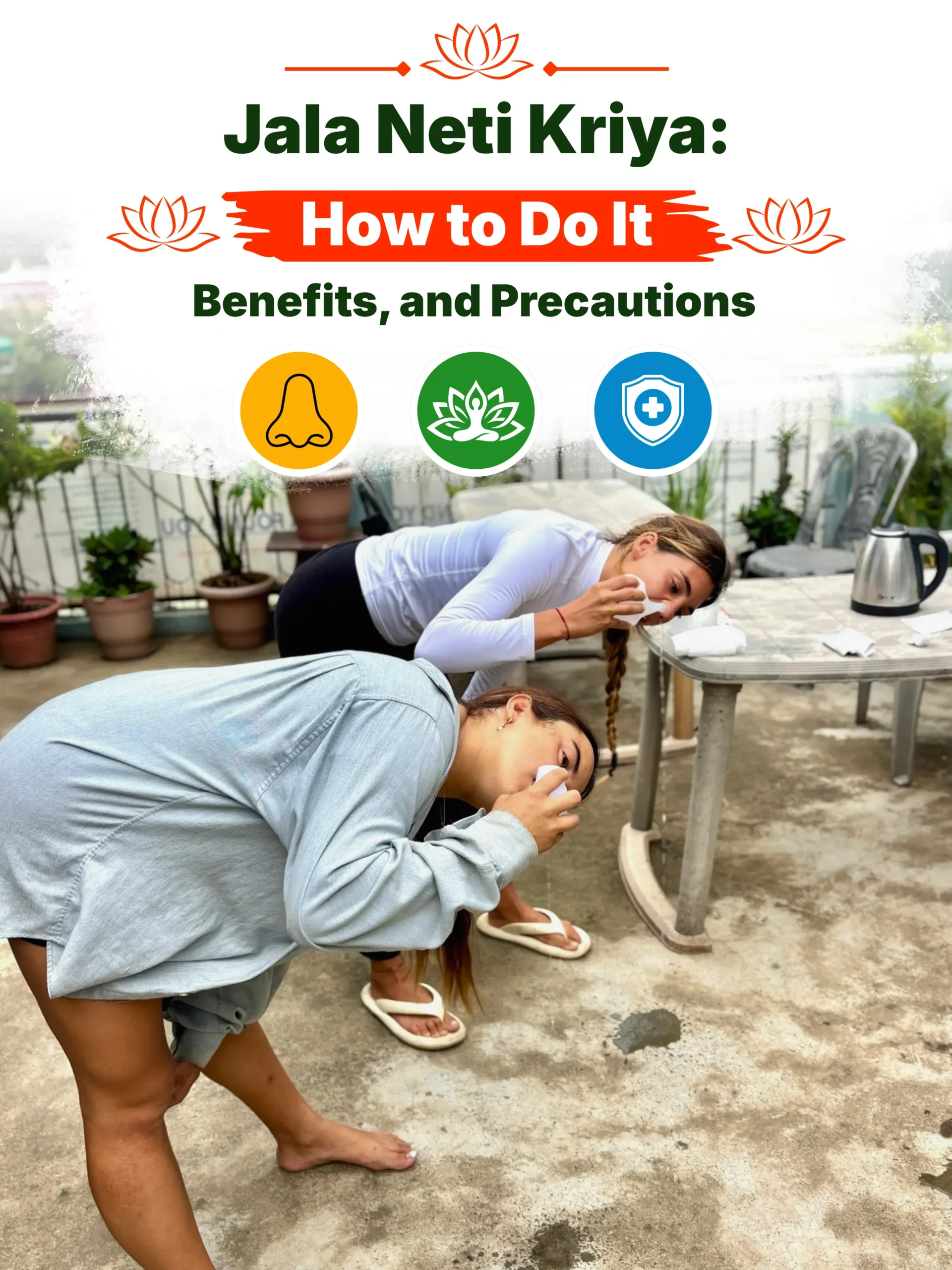
Quick Summary: Jala Neti Kriya is a yoga technique used to cleanse the nose. Salt water is poured through one nostril and comes out of the other nostril. The salt water may help to clear any dust or mucus that is present, thus making breathing easier. Clean water and a neti pot should be used in the technique. However, people with nosebleeds or completely blocked noses should avoid the technique.
You know that morning feeling? Stuffy nose, heavy head, and you haven’t even had chai yet. Dust, pollen or dry air is usually the culprit. In India, people have fixed this for ages with something very basic. A small pot, a pinch of salt, some warm water, five minutes. It’s called Jala Neti Kriya.
Yogis do it before pranayama and meditation. Lots of regular folks do it just to breathe better. The first try feels weird; we won’t lie. But most people say the nose feels light and clear soon after. Below, you’ll see how to do it, what it may do for you, and how to stay safe.
What Is Jala Neti Kriya?

Jala means water. Neti means nose cleaning. So Jala Neti Kriya is simply a nose wash with water.
It’s one of the six shatkarmas, the cleansing practices of Hatha yoga. Old books like the Hatha Yoga Pradipika mention neti as well.
Here’s how it goes. You tilt your head and pour salt water in one nostril. It flows through and comes out the other side, taking dust and mucus along.
Yoga teachers have taught this for generations. These days, some doctors also suggest saltwater rinses, as long as the water is clean.
| Point | Details |
| Type | Shatkarma (yoga cleansing practice) |
| Tool | Neti pot |
| Liquid | Clean, lukewarm salt water |
| Time needed | 5 to 10 minutes |
| Best time | Morning, empty stomach |
| Skill level | Easy, but learn with a teacher first |
How Does Neti Work Inside the Nose?
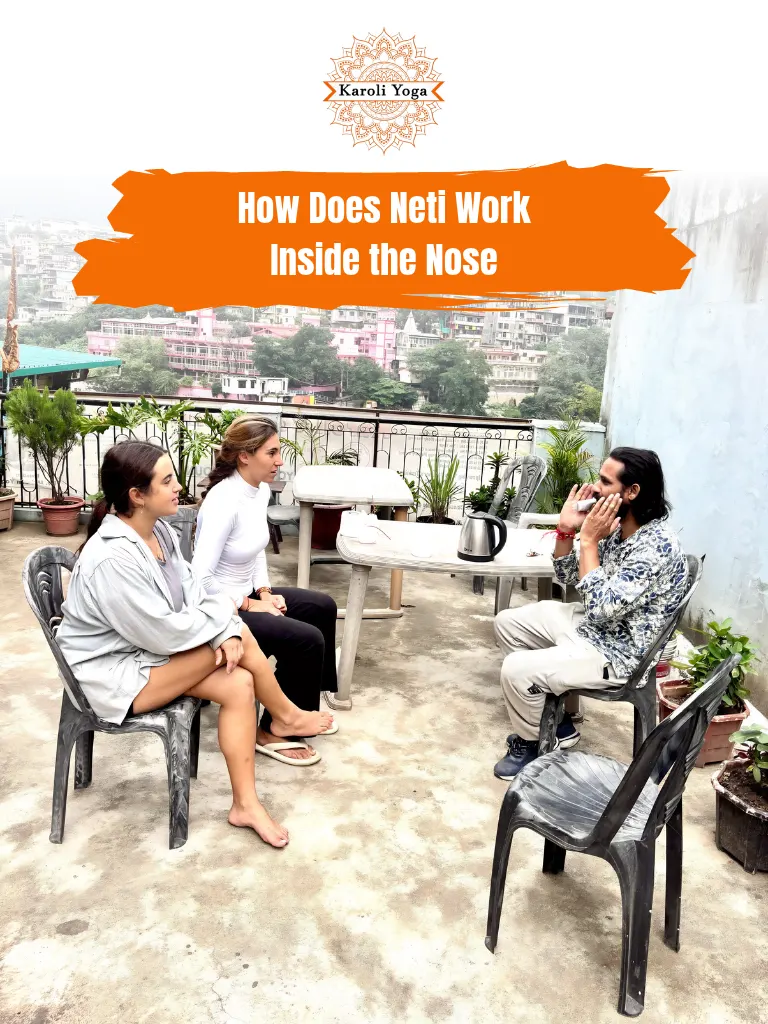
In your nose, there is a moist mucous membrane with many hairs known as cilia. They constantly push mucus and dust up into your throat.
But if the air is dry, you are in smoky areas, in the presence of pollen, or the temperature is low, the cilia slow. This makes the mucus thick, and therefore your nose feels blocked.
Salt water helps in two ways. It thins the mucus so it can move again. It also rinses off the dust and pollen stuck to the lining.
The salt amount is important. Plain water stings. Too much salt burns. Half a teaspoon in 250 mL is a good place to start. If it stings, cut the salt a little.
What Are the Benefits of Jala Neti Kriya?

The changes are small, but you do notice them. Most people see a difference in a few weeks.
- Easier breathing. Thick mucus blocks the path. A rinse clears it, and air moves through both nostrils with less effort. Many people feel this right after Jala Neti Kriya.
- Less dust and pollen. Dust sticks to the lining and makes you sneeze and itch. A wash takes it out before it piles up. Some people with allergies find this helpful.
- Less sinus pressure. Thin mucus is easy to drain, so the feeling of heaviness around the nose and forehead may go away. There is research that shows how beneficial it is for people with sinus problems. This practice is healthy but not curative.
- Relief from a dry or dusty environment. Fans, AC and a dusty environment tend to dry the nose. Salty water will keep it moisturised. Jala Neti Kriya in hot and dusty weather helps keep the nose comfortable.
- Enhanced pranayama and meditation. Even distribution of breath in both nostrils calms the mind. That’s why teachers do Jala Neti Kriya first thing in the morning.
| Benefit | What You May Notice |
| Easier breathing | Less mouth breathing, lighter head |
| Less dust and pollen | Fewer sneezes, less itching |
| Less sinus pressure | Less heaviness near the forehead |
| Comfort in dry air | Less dryness after hours in AC |
| Better pranayama | Calmer, longer breaths |
How Do You Do Jala Neti Kriya at Home?
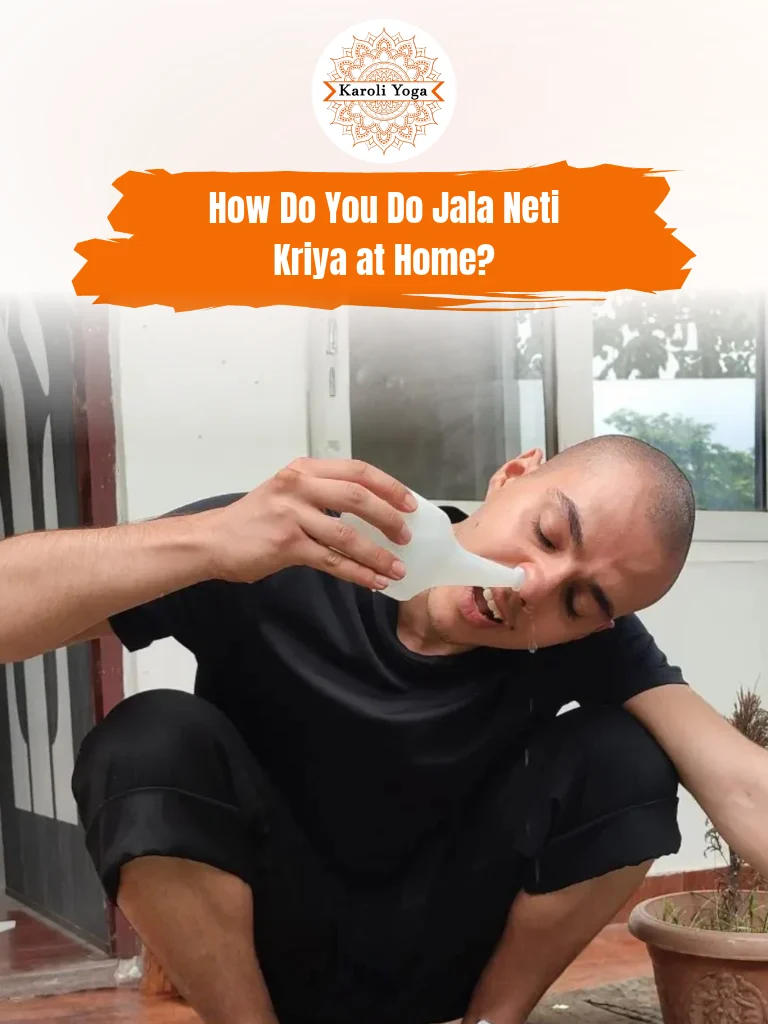
The process is very simple, but the small things make all the difference. Be ready, stir the water, and be patient. It will be much easier to learn the Jala Neti Kriya from an instructor than learning by trial and error.
Things You Will Need
- Neti pot (made of ceramic, steel, or plastic)
- 250 mL of clean, lukewarm water
- Half a teaspoon of non-iodized salt
- A clean towel
- A sink or an open spot outside
- Ten quiet minutes
How Much Salt and Which Water?
| Water Amount | Non-Iodized Salt |
| 250 mL (1 cup) | About half a teaspoon |
| 500 mL (2 cups) | About one teaspoon |
| Water Type | Safe? | Note |
| Distilled water | Yes | Best choice |
| Boiled and cooled water | Yes | Boil for at least one minute |
| Plain tap water | No | May have germs |
| Hot water | No | Can burn the nose |
| Cold water | Not ideal | Feels sharp |
Steps
- Mix half a teaspoon of salt in 250 mL of lukewarm water. Stir until it dissolves.
- Fill the neti pot and stand over a sink.
- Lean forward a little and tilt your head to the left.
- Gently put the spout in your right nostril, the upper one.
- Open your mouth and breathe through it. This keeps water away from your throat.
- Slowly raise the pot. The water will come out of your left nostril.
- Use half the water, then switch sides.
- Lean forward and exhale gently through both nasal passages. Do not exhale forcefully.
The liquid must taste like tears. If you feel a burning sensation, reduce the salt. In case water enters your throat, simply loosen up and continue breathing through your mouth. This is common for everybody.
What to Do After
A few small steps finish Jala Neti Kriya properly:
- Bend down slightly and exhale slowly to expel the remaining water from your body
- Dry your face and nose using a clean towel
- Wait a few minutes before you start pranayama
- Wash your neti pot right away
Tips for Beginners
- Start with a small amount of water on each side
- Relax your forehead, jaw and shoulders
- Use a mirror to check your head angle
- Ask a teacher to watch your first few tries
- If one side feels blocked, stop and try again tomorrow
Common Mistakes
Small errors cause most of the trouble. Fix these early so your Jala Neti Kriya stays smooth and safe.
| Do This | Not This |
| Use distilled or boiled, cooled water | Use plain tap water |
| Keep the water lukewarm | Use hot or icy water |
| Breathe through your mouth | Hold your breath |
| Tilt your head sideways | Tilt your head far back |
| Dry your nose gently | Blow hard |
| Wash the pot after each use | Share your pot |
Who Should Not Do Jala Neti Kriya?
Skip Jala Neti Kriya if you have:
- Frequent or current nosebleeds
- Recent surgery on the nose, sinus or face
- A fully blocked nose where water can’t pass
- An ear infection or ear pain
Ask a doctor first if you are:
- Pregnant
- Living with long-term sinus problems
- Not sure about your health
Children should only do it with an adult who knows the method. If in doubt, ask first. A short talk with a doctor costs very little.
Some feelings are normal at the start. Others mean you should stop.
| Normal | Stop and Get Advice |
| A slight tickle or warmth in the nose | Sharp pain or burning |
| A mild salty taste in the throat | A nosebleed |
| Water dripping out when you bend forward | Ear pressure or ear pain |
| A light, clear feeling after | Dizziness or a headache that won’t go away |
If you see a warning sign, stop and rest. Talk to a doctor if it continues. Safe Jala Neti Kriya should never hurt.
When Should You Do Jala Neti Kriya, and How Often?
Most teachers like early morning hours because there is nothing in the stomach. At that hour, there are lots of secretions in the nose. Wiping the nose will prepare one for pranayama.
| Level | How Often | Best Time |
| Beginner | Three or four times a week | Early morning, before breakfast |
| Regular practice | Daily, once a teacher checks your method | Early morning, before pranayama |
| Stuffy evening | Once, if needed | At least two hours after a meal |
Your body will tell you what to do. If you discover that your nose is dry and inflamed, then take some days off. Slow and steady wins the race.
How to Care for Your Neti Pot
A dirty pot can push germs into your nose. Clean it after every use.
- Wash the pot and spout with soap and warm water
- Rinse well and shake out the water
- Let it dry fully in a clean spot
- Check for cracks from time to time
- Replace a plastic pot if it cracks or smells
It takes one minute and keeps your Jala Neti Kriya practice safe.
Conclusion
Jala Neti Kriya isn’t hard. You need clean water, a pinch of salt, and a neti pot. Go slow and don’t force anything. Your nose will tell you if it’s too much.
Most people feel a change by the second or third morning. The breath moves easier. The head feels less foggy. It’s not magic. It’s just a clean nose.
We do neti in our morning classes at Karoli Yoga School in Tapovan, right before pranayama. Want to learn it the proper way? Look at our 100 Hour Yoga Teacher Training Course in Rishikesh. The 200 Hour Yoga Teacher Training in Rishikesh and the 300 Hour Yoga Teacher Training in Rishikesh come next. Only have a few days? Join one of our Rishikesh Yoga Retreats.
Still unsure about Jala Neti Kriya, or need course dates? Drop us a message on WhatsApp. You can also follow us on Instagram and Facebook for more yoga tips.
Frequently Asked Questions
Q1. What does Jala Neti Kriya do?
It washes out dust and mucus, so breathing gets easier. Some people also feel less pressure around the sinuses. Sitting for pranayama feels calmer too.
Q2. Who should not do Jal Neti?
Anyone with nosebleeds, a recent nose surgery, an ear infection, or a fully blocked nose. Pregnant, or have long-term sinus trouble? Talk to your doctor first.
Q3. Does Jal Neti open a blocked nose right away?
Often yes, if the block is mild. If the nose is fully shut, the water can’t pass. Don’t force it. Go see a doctor.
Q4. How do you do Jala Neti Kriya?
Stir half a teaspoon of salt into 250 mL of clean, lukewarm water. Tilt your head. Put the spout in the upper nostril and breathe through your mouth. Let the water run out the other side. Switch sides, then dry your nose gently.
Q5. When should you do Jal Neti?
Early morning, before you eat. If you do it later in the day, wait at least two hours after a meal.