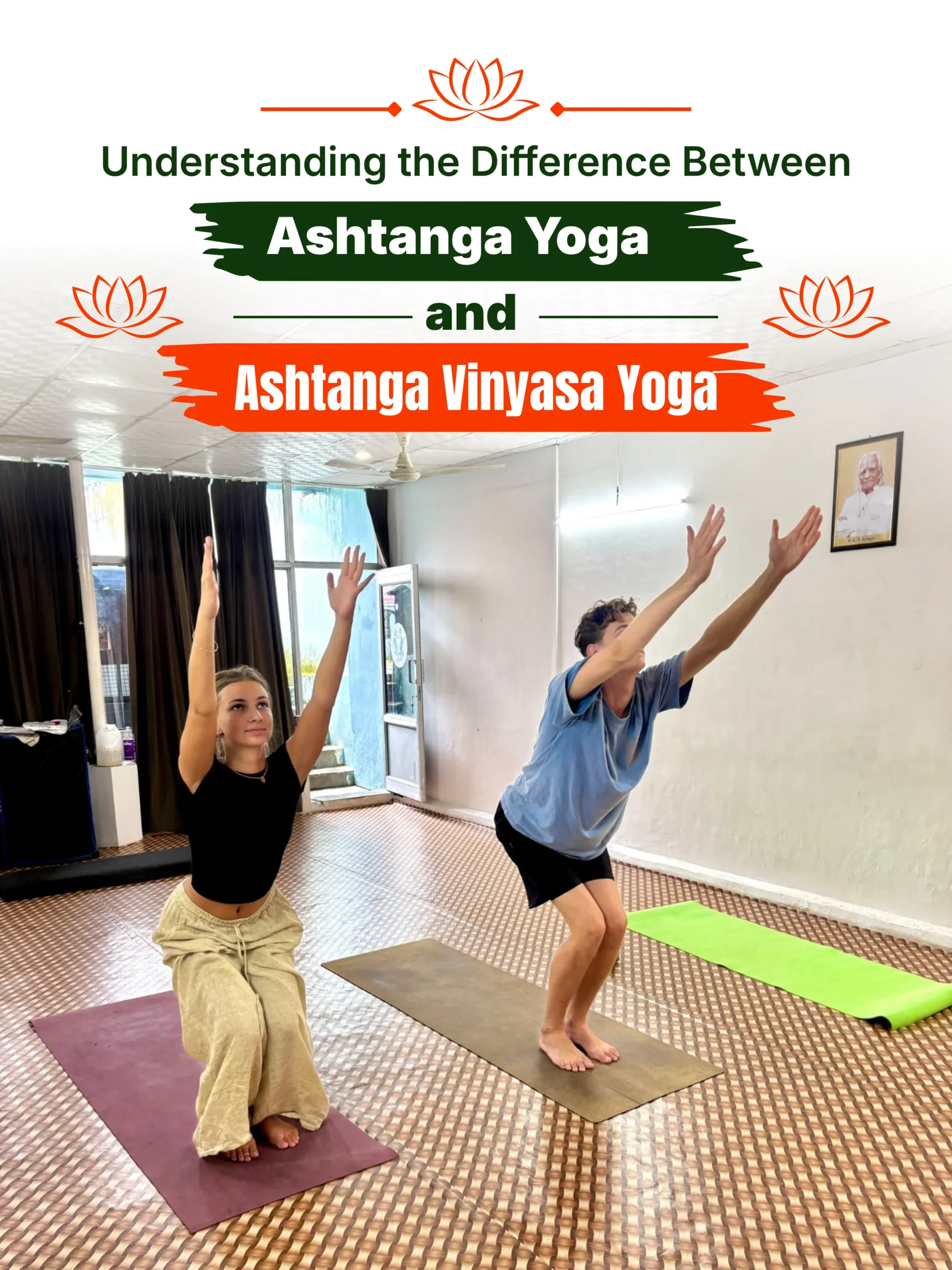
Quick Summary: Ashtanga Yoga means the eight-limbed path from Patanjali’s Yoga Sutras. Ashtanga Vinyasa Yoga is the physical style taught by K. Pattabhi Jois, with a fixed series, linked breath, and a steady gaze. Many teachers use both names for one class. This guide explains the real difference, the basics, and how to start safely.
Walk into a yoga studio, and you may see names like Ashtanga, Ashtanga Vinyasa, and Ashtanga Mysore on the board. Are they the same thing? Not quite. That small gap often confuses new students. One name points to an old path of eight steps. Another points to a strong, flowing style of practice. They are linked, yet they are not twins. Once you see how, the whole picture clicks. This guide explains each term in simple words. You will learn where Ashtanga Yoga comes from, what makes Ashtanga Vinyasa special, and how to begin with care. Do not worry. It is simpler than it sounds. Let us start with the basics. Ready to clear the confusion once and for all?
Why Do People Mix Up the Names?
The word Ashtanga means eight limbs. Teachers use it in more than one way, so you meet it in three places:
- In the Yoga Sutras, as the eight-limbed path
- In classes, as a short name for the Jois style
- On timetables, as “Ashtanga Vinyasa” for a flowing, series-based class
Each use is fair, yet they are not the same. Many students first meet Ashtanga Yoga on a timetable, not in a book.
What Does Ashtanga Yoga Mean in the Yoga Sutras?
Ashta means eight. Anga means limb. In the Yoga Sutras, the sage Patanjali described eight limbs. Each limb is one step on the path.
| Limb | Meaning | In Simple Words |
| Yama | Ethical rules | How you treat others |
| Niyama | Personal habits | How you treat yourself |
| Asana | Postures | A steady, easy pose or seat |
| Pranayama | Breath control | Guiding the breath |
| Pratyahara | Drawing the senses inward | Turning attention in |
| Dharana | Focus | Holding attention on one point |
| Dhyana | Meditation | A steady flow of attention |
| Samadhi | Absorption | Deep stillness |
Posture is only the third limb. So in this sense, Ashtanga Yoga is a whole way of life, not a workout.
What Is Ashtanga Vinyasa Yoga?
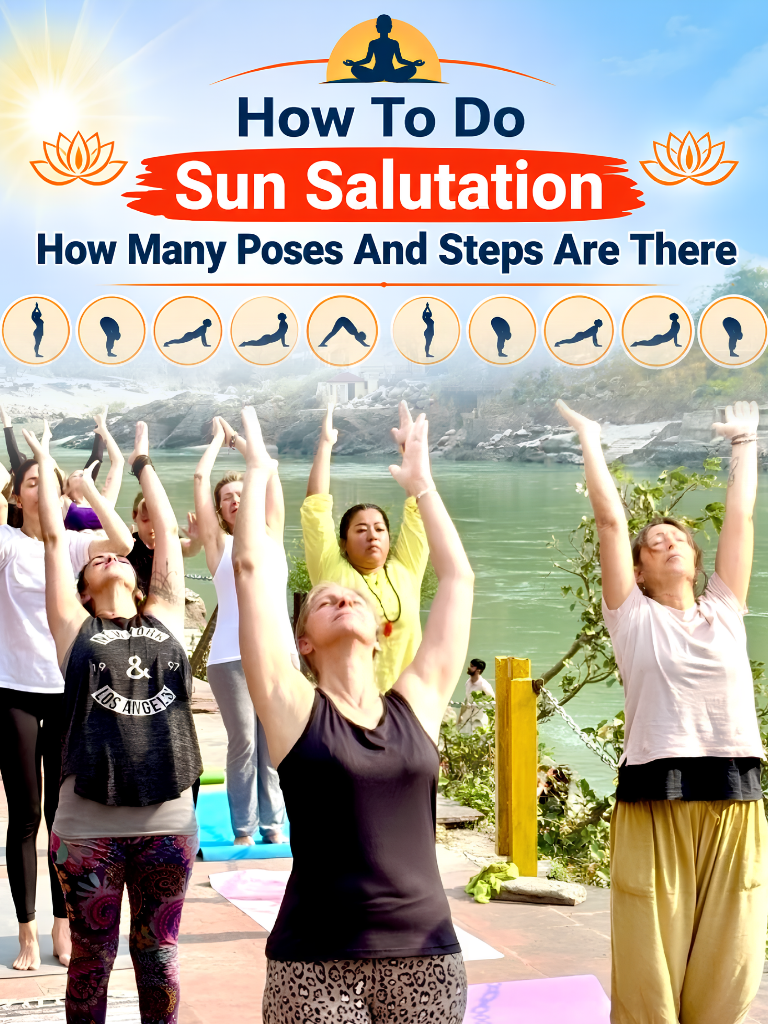
K. Pattabhi Jois taught this method in Mysore, India. Jois learned it from T. Krishnamacharya. The method turns the third limb, asana, into a set practice. Poses come in a fixed order, and each move links to a breath. That linking is called vinyasa. A class usually moves from Sun Salutation to standing poses, seated poses, and final rest.
Five parts shape the practice:
- A fixed series of poses
- Ujjayi, a steady, soft sound in the breath
- Drishti, a set gaze point in each pose
- Bandhas, light inner locks that give lift and control
- Vinyasa, the flowing moves that join the poses
How Is Ashtanga Yoga Different From Ashtanga Vinyasa Yoga?
Both names share one word, so many people treat them as one thing. They are not. Here is the short answer in one table.
| Point | The Eight-Limbed Path | Ashtanga Vinyasa Yoga (Jois Method) |
| What it is | A full path of eight steps | A style of physical practice |
| Source | Patanjali’s Yoga Sutras | K. Pattabhi Jois and the Mysore tradition |
| Main focus | Ethics, breath, mind, stillness | Fixed poses linked by breath |
| Posture role | One limb of eight | The main daily work |
| Where you meet it | Books and philosophy classes | Studios and Mysore rooms |
Think of a map and a road. The eight limbs are the map. Ashtanga Vinyasa is one road built on that map. Now let us look at five clear differences in more detail.
1. Meaning and Origin
The word is the same, but the roots are not.
- Eight-limbed path: an ancient teaching from Patanjali’s Yoga Sutras
- Ashtanga Vinyasa: a style built in Mysore by K. Pattabhi Jois in the 1900s
Simply put, one name leads you to a book, and the other leads you to a mat.
2. Scope
One is wide. The other is focused.
- Eight-limbed path: covers ethics, habits, breath, focus, and meditation
- Ashtanga Vinyasa: trains the body, breath, and focus through set poses
So the path guides your whole life, while the style shapes your practice time.
3. What You Actually Do
The daily work looks very different.
- Eight-limbed path: you live by values, study, breathe, and meditate
- Ashtanga Vinyasa: you roll out a mat and follow the series
You can follow the path anywhere, but the style needs a mat, space, and a teacher’s help at first.
4. Breath and Gaze
Breath plays a part in both, in different ways.
- Eight-limbed path: breath control is its own limb, taught as a separate practice
- Ashtanga Vinyasa: breath and gaze run inside every pose
In Ashtanga Vinyasa, you learn to breathe, look, and move together.
5. Teaching Format
How you learn also differs.
- Eight-limbed path: taught through texts, talks, and daily habits
- Ashtanga Vinyasa: taught in led classes or Mysore-style self-practice
Pick a led class to learn the series. Try Mysore style once you know it.
6. Pace and Fitness
Both ask for effort, but the pace is not the same.
- Eight-limbed path: has no set pace, so any age or fitness level can follow it
- Ashtanga Vinyasa: moves at a steady, strong pace and builds stamina over time
Start slowly with the style, and let strength grow week by week.
In daily talk, many people drop the word Vinyasa. That is fine. Just ask one question: do you mean the path or the practice? Knowing the gap helps you choose the right class for Ashtanga Yoga.
What Do the Series and the Weekly Rhythm Look Like?
The Jois method has set levels. Students of Ashtanga Yoga move on only when the body and breath are ready.
| Series | Traditional Name | Focus |
| Primary | Yoga Chikitsa | Heals and aligns the body |
| Intermediate | Nadi Shodhana | Cleans the energy channels |
| Advanced A to D | Sthira Bhaga | Strength and balance for skilled students |
The weekly rhythm is simple:
- Traditional practice runs six days a week
- Saturdays and moon days are rest days
- Mysore style: you practise at your own pace while the teacher helps
- Led class: the teacher counts each breath and move for the group
What Are the Basics of Ashtanga Yoga Practice?
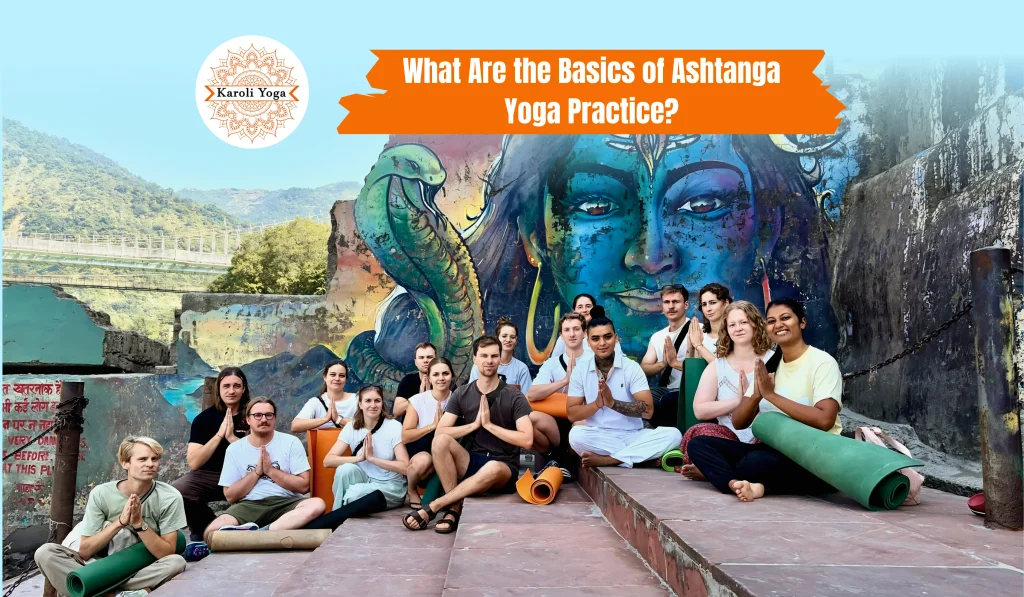
You need no fancy skills to begin, only a few core habits. These essentials guide every session of Ashtanga Yoga:
- Breath first: keep a smooth, even Ujjayi breath
- Gaze: rest your eyes on one point
- Bandhas: engage the core lightly
- Fixed order: follow the same series
- Regular practice: short, steady sessions
- Patience: move on when the breath stays calm
How Can Beginners Start Safely?
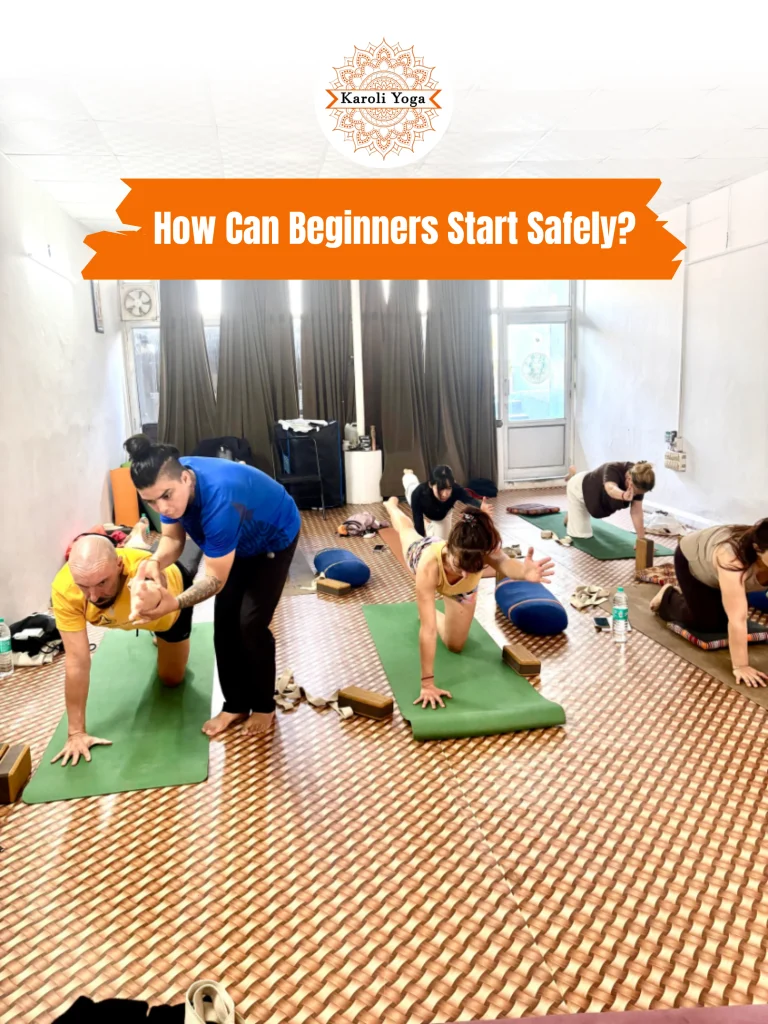
This style is demanding, but beginners can start well:
- Join a beginner or led class first
- Learn Sun Salutation and standing poses first
- Use modifications, such as bent knees or a strap
- Stop if you feel sharp pain
Ask a doctor first if you are pregnant or have a heart, blood pressure, or injury concern. A trained teacher can guide your first weeks of Ashtanga Yoga.
Is Ashtanga Yoga Right for You?
This style suits you if you:
- Like routine and clear steps
- Want steady strength and stamina
- Enjoy tracking your own progress
- Want a link to yoga’s older roots
Try a gentler class first if you dislike repeating the same poses.
Conclusion
Remember this simple rule. Ashtanga Yoga is the eight-limbed path. Ashtanga Vinyasa is the flowing style built on it. Both ask for steady effort, calm breath, and an open mind.
At Karoli Yoga School in Tapovan, our courses are based on Hatha and Ashtanga, and students learn a guided Primary Series with modifications. You can begin with a 100 Hour Yoga Teacher Training Course in Rishikesh, grow in a 200 Hour Yoga Teacher Training in Rishikesh, or go deeper with a 300 Hour Yoga Teacher Training in Rishikesh. Prefer a short stay? Join one of our Rishikesh Yoga Retreats.
Have questions about Ashtanga Yoga, our courses, or upcoming dates? Message us on WhatsApp. Our team is happy to help.
You can also follow us on Instagram and Facebook for more yoga tips.
Frequently Asked Questions
1. Is Ashtanga the hardest yoga?
It feels tough because the series is fixed and continuous, but difficulty depends on your body and teacher. Many Ashtanga Yoga classes offer easy options for beginners.
2. How is Ashtanga yoga different?
It follows a fixed series linked by breath, gaze, and bandhas, while many other styles change each class. In its wider meaning, Ashtanga Yoga also points to Patanjali’s eight limbs.
3. What are the basics and essentials of Ashtanga yoga?
The basics are Ujjayi breath, drishti, bandhas, vinyasa, and a fixed order of poses. Add regular practice and patience, and Ashtanga Yoga becomes steady and safe.
4. Can beginners start Ashtanga Vinyasa?
Yes, with a beginner class and a trained teacher. Start with Sun Salutation and standing poses, and add more slowly.
5. How often should you practise Ashtanga?
Traditional practice is six days a week, but beginners can start with two or three days. Build up slowly and keep rest days, since Ashtanga Yoga rewards steady effort.