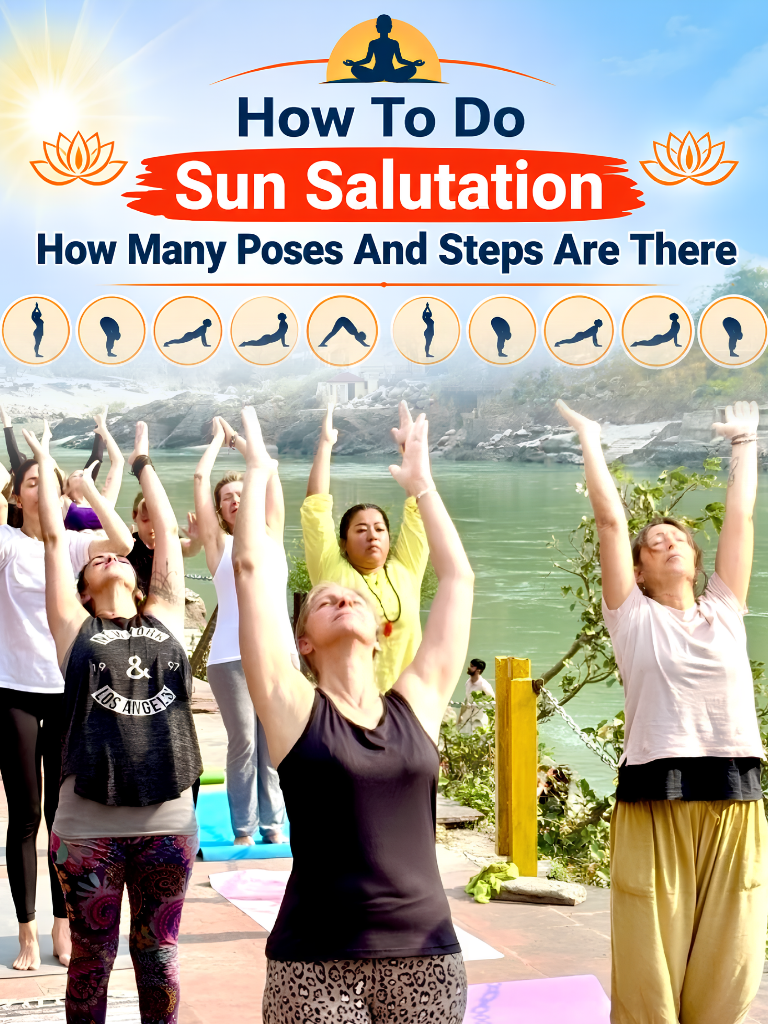
How to Do Sun Salutation: How Many Poses and Steps Are There?
In Hatha Yoga, Sun Salutation has 12 poses and 24 steps. Why?
There are 12 steps on the right side and 12 steps on the left side. This helps balance both parts of the body. If we repeat on only one side, the energy on one side becomes higher compared to the other side, which is not good for the body.
So, 12 steps on the right side and 12 steps on the left side are very important to balance the energy or Pranic flow in our body equally. It activates the energy flow and opens and channels the 72,000 energy channels.
So, Sun Salutation is a very important exercise. Do not miss this in your life during the practice of Yoga.
Practice Step by Step
First, you always have to start from Samasthiti, which will give you the base in the beginning. If your base is strong, your asana will be strong.
So, when you do Samasthiti during Sun Salutation, you have to stand on your heels, not your toes, because if you stand on your toes, pressure comes on the knees.
So, you have to stand on both your heels, so both your legs become pillars.
1. Pranamasana (Prayer Pose)
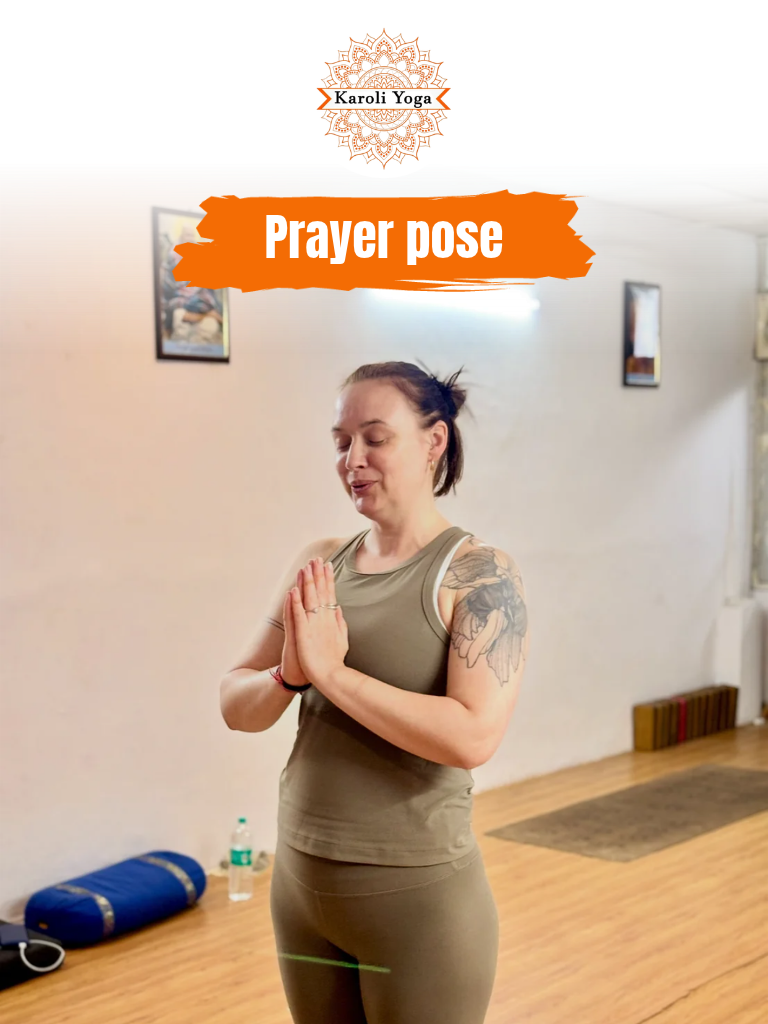
It means Prayer Pose. Exhale with breath.
2. Urdhva Hastasana (Upward Salute or Palm Tree Pose)
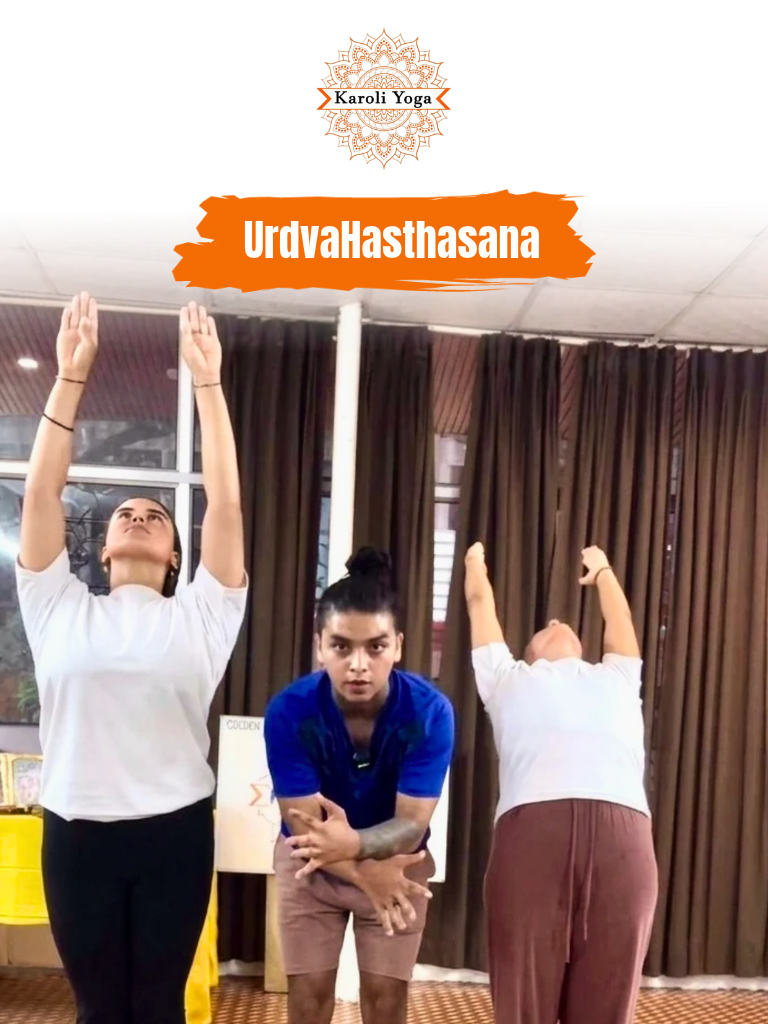
Many people keep the front to arch the back here, so they get stuck here because the movement is coming from the front side, which is allowing you to move your shoulder compared to the back.
If you’re finding difficulty arching your back, you can keep your palms facing each other, then you can arch the back.
The traditional approach, you can keep your palms facing the front side to arch the back, but the modern approach, you can keep your palms facing each other to arch the back. Both are right, but it is only for range of motion. But you choose yours.
3. Padahastasana (Hand-to-Foot Pose)
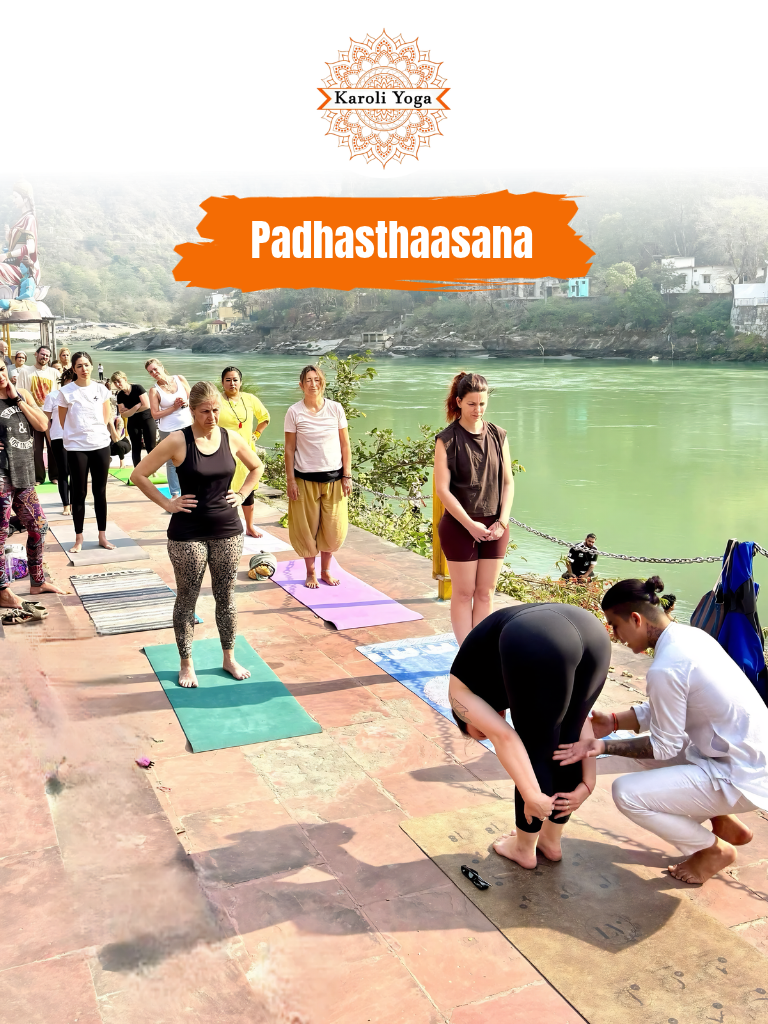
When you practice this pose, if you’re not able to touch your palms on the ground, you can bend your knees and grab your elbows, then you can bring your head down.
One very important thing: if you’re not able to touch your head to your knees, you can look at your feet. It’s totally fine. Day by day, you can touch your head to your knees.
4. Ashwa Sanchalanasana (Equestrian Pose or Low Lunge)
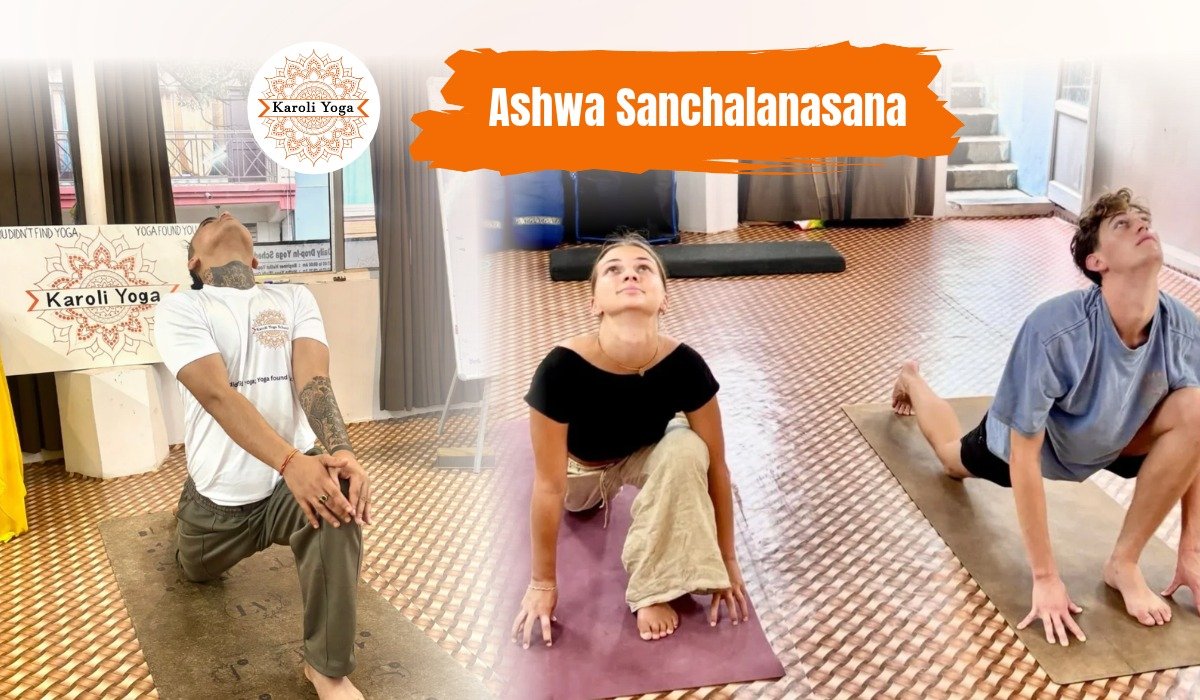
During the first round of Sun Salutation, your right leg will go back, then you can open the chest, saluting to the Sun.
When you do this, your knee position should be over the ankle. When you do it dynamically, your knee will be more forward than your ankle.
If you’re not able to arch your back, you can keep your palms on top of the knee, then you can arch your back.
5. Parvatasana (Mountain Pose)
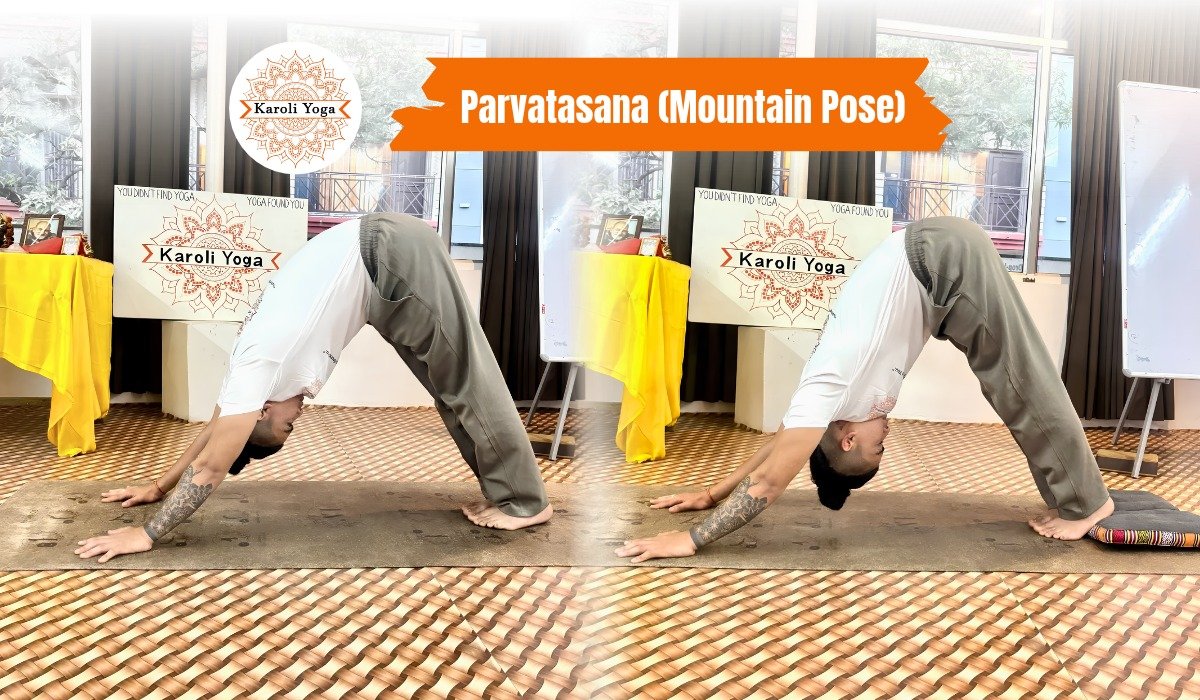
Here, you need to keep your legs together at the back, trying to keep both your heels touching the ground. If not, you can keep a pillow under the heels. Then you can hold it for a long time.
Practising in this way, you can remove the pillow, and then we practise it. And your spine should be rounded, not a straight back.
6. Ashtanga Namaskara Asana (Eight-Limbed Pose or Knees-Chest-Chin Pose)
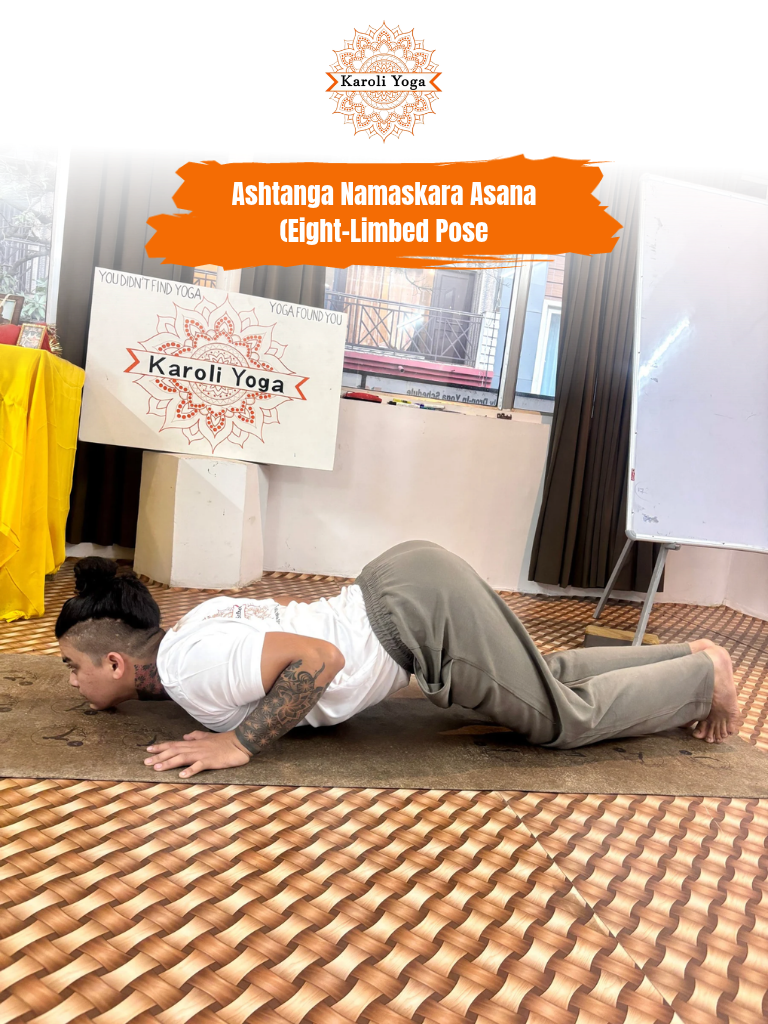
Which limbs?
- Right palm
- Left palm
- Chin
- Chest
- Right knee
- Left knee
- Right leg toes
- Left leg toes
When you practise, keep your palms close to the chest, not your shoulders, which will allow you to open your chest.
Through these eight limbs, you are saluting the Sun, so we call this asana Ashtanga Namaskara Asana.
7. Bhujangasana (Cobra Pose)
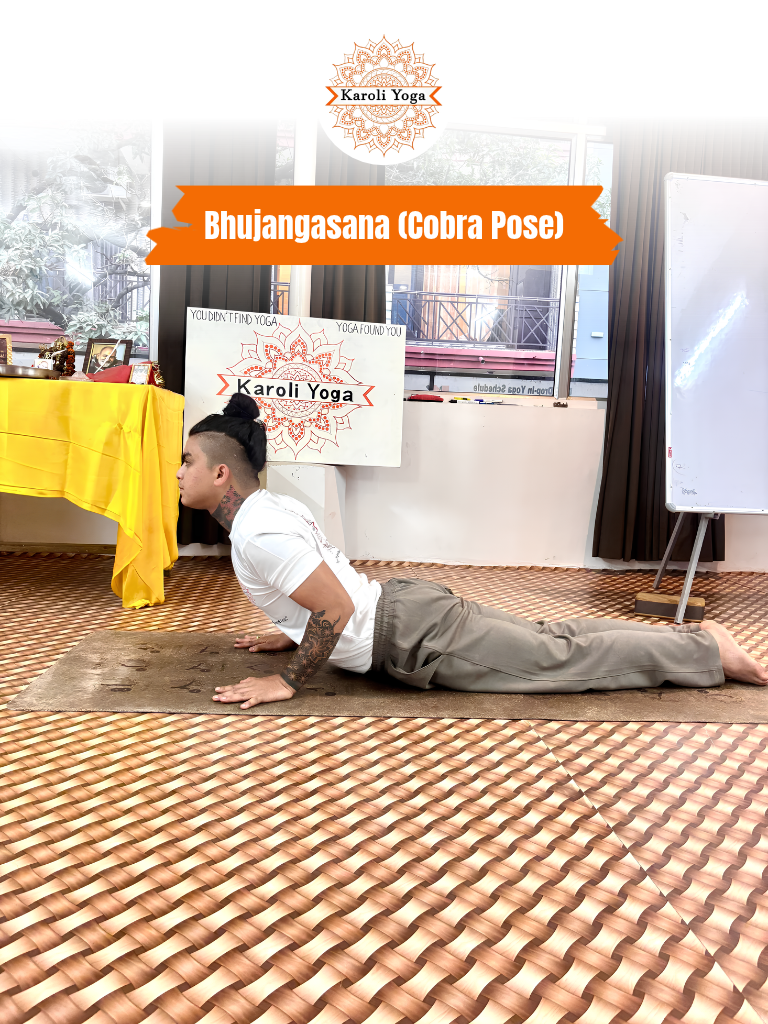
When you practise it, you don’t need to lift your navel too much.
Your navel should contact the floor. Your navel should touch the ground a little bit because it’s not only a warm-up exercise. You are saluting the Sun. You are devoting yourself to the Sun. That’s the reason this asana is passive.
Both your legs should be together. If you have a tight back, you can open your legs hip-apart.
8. Parvatasana (Mountain Pose)
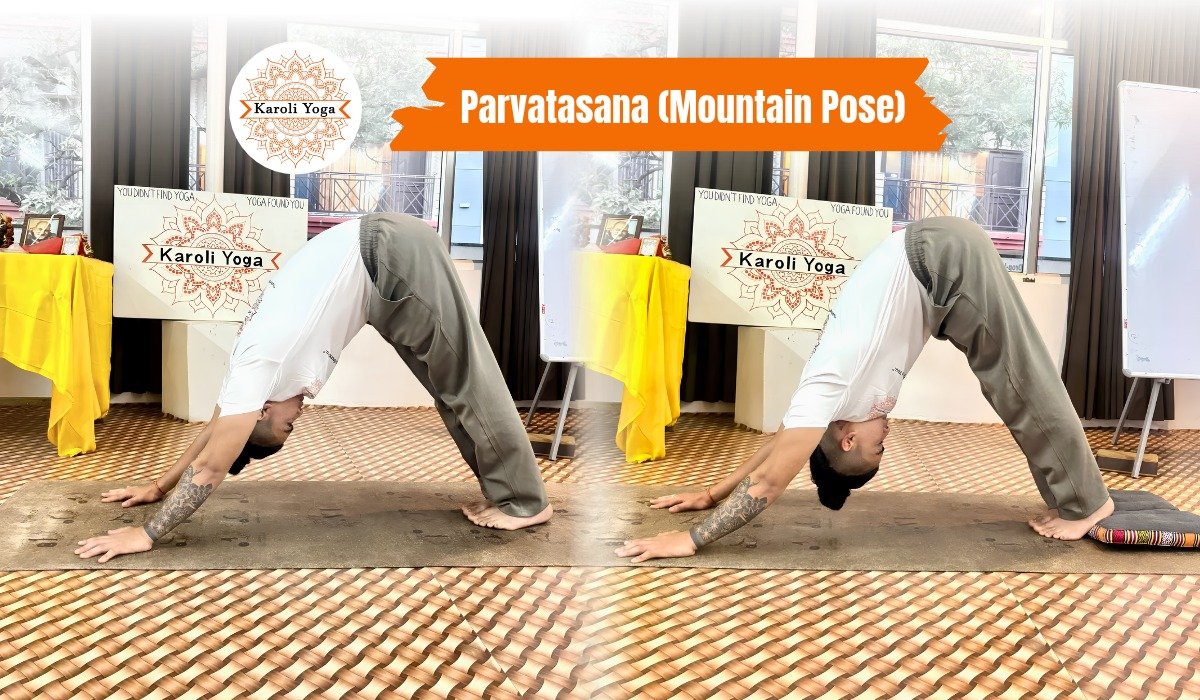
So, when you do Parvatasana, your head should be down in Mountain Pose. Many people push the hips back, but you don’t need to do this. What you do is keep your legs together and arms straight.
Straight, and just drop the head down. You don’t need to make your back straight. If you have a round back, it’s fine. It’s Parvatasana.
9. Ashwa Sanchalanasana (Equestrian Pose or Low Lunge)
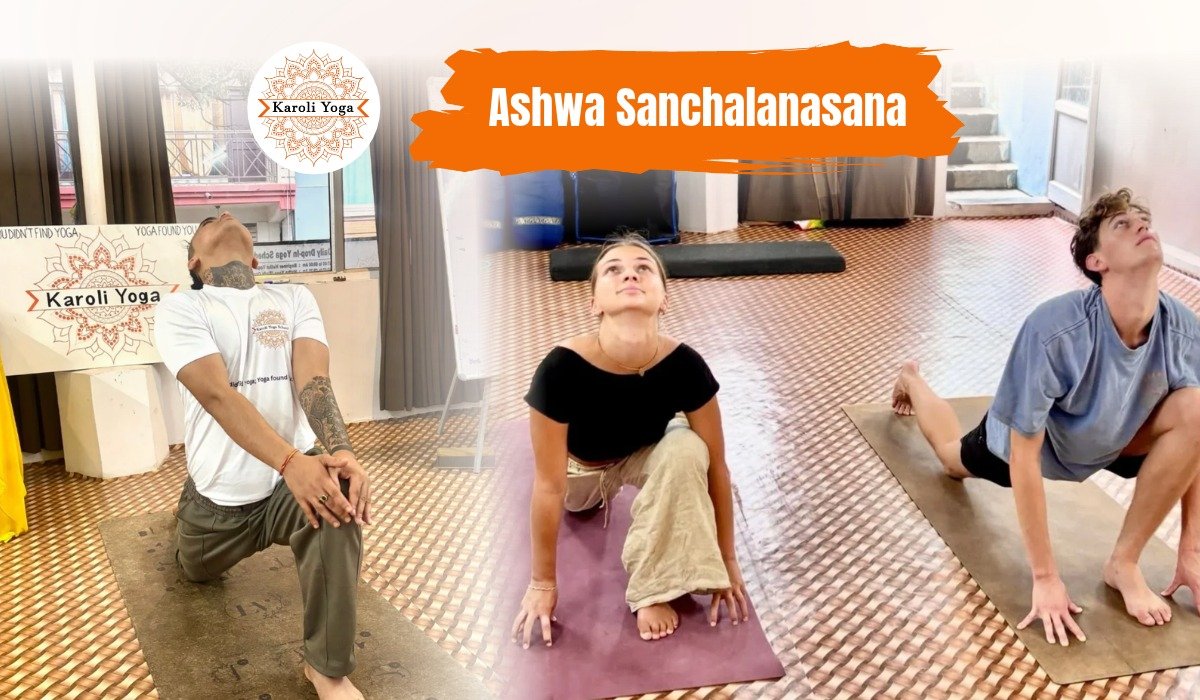
Then you have to take your left leg to the front because the right leg will go back, so the left leg will come to the front. Drop the knee down, toes back, knee at 90 degrees, then palms down and lift the chest.
If you’re not able to place your palms down, you can keep yoga blocks under your palms, then you can practise it.
10. Padahastasana (Hand-to-Foot Pose)
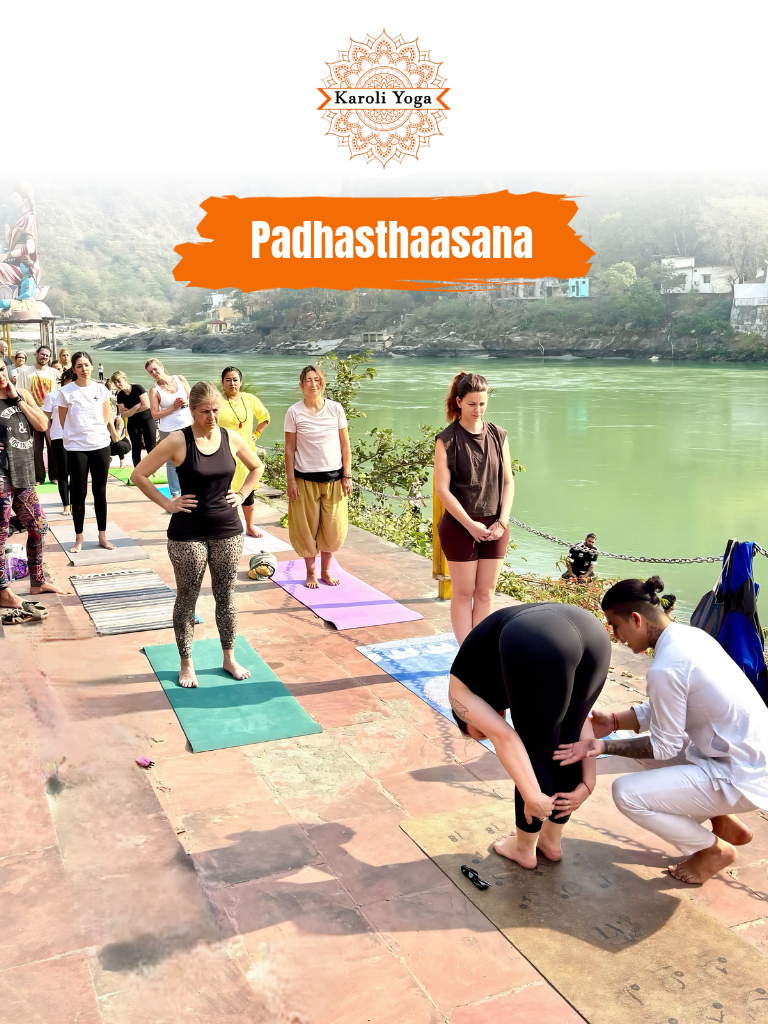
When you practise this pose, if you’re not able to touch your palms on the ground, you can bend your knees and grab your elbows, then you can bring your head down.
One very important thing: if you’re not able to touch your head on the knee, you can look at your feet. It’s totally fine. Day by day, then you can touch your head on the knee.
11. Urdhva Hastasana (Upward Salute or Palm Tree Pose)
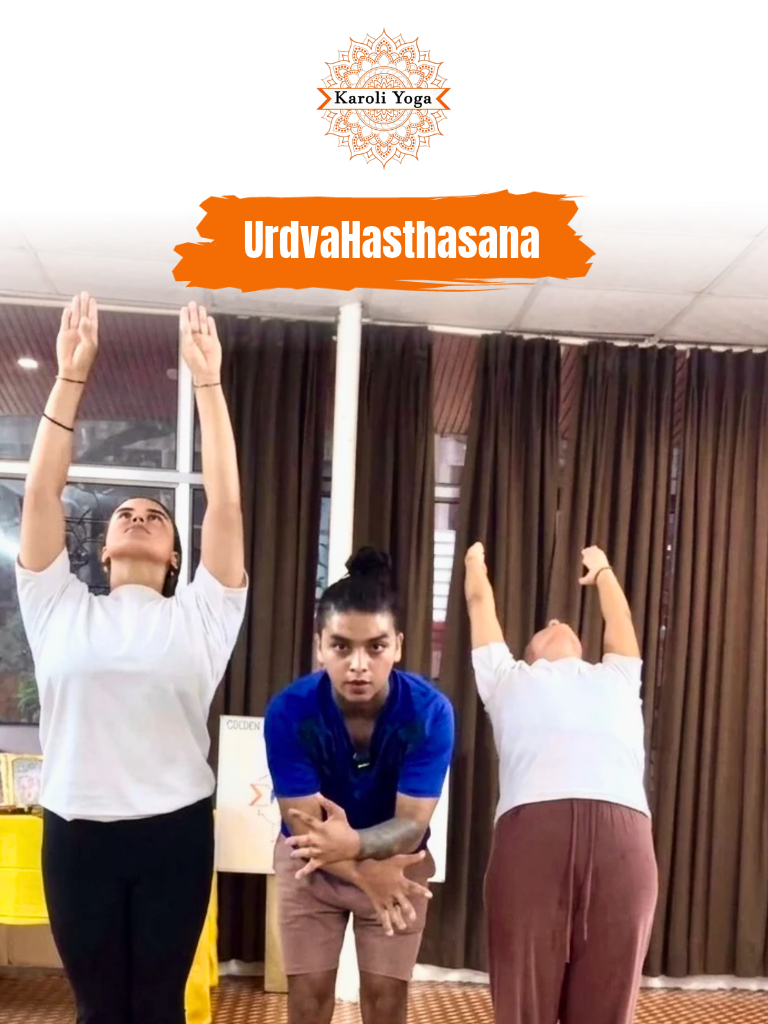
Many people keep the front to arch the back here, so they get stuck here because the movement is coming from the front side, which allows you to move your shoulder compared to the back.
If you’re finding difficulty arching your back, you can keep your palms facing each other, then you can arch your back.
In the traditional approach, you can keep your palms facing the front side to arch the back, but in the modern approach, you can keep your palms facing each other to arch the back. Both are right, but it is only for range of motion. But you choose yours.
12. Pranamasana (Prayer Pose)
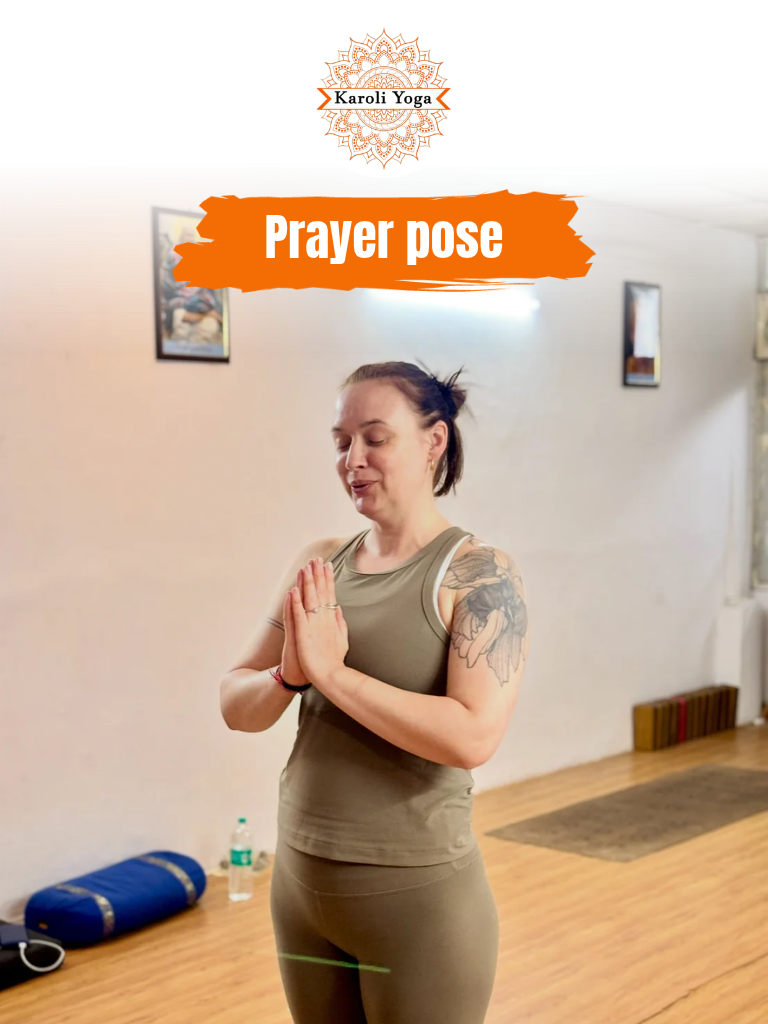
It means Prayer Pose. Exhale with breath.
What Is Sun Salutation and Where Did It Come From?
Sun Salutation is a chain of 12 yoga poses. In India, people call it Surya Namaskar. Surya means sun. Namaskar means a bow. So the name means a bow to the sun.
People in India have prayed to the sun for a very long time. The 12-pose Sun Salutation we do today is newer, though. Here is how the story goes:
- In the early 1900s, it began to spread. Many yoga historians agree on this.
- The Raja of Aundh, who was a king, introduced it as an exercise to promote good health.
- It was then incorporated by teachers such as Krishnamacharya into their yoga sessions, together with breathing tips.
Thus, the sun prayer and the sun salutation are two different things. The prayer is very old, while the sequence is relatively new. It is important to remember that you can practice it as exercise, a habit, or both.
A few simple facts help you get started:
- You need a mat and a little space.
- Early morning is a good time.
- Try it before breakfast, when your stomach is light.
- One round takes about a minute or two.
Is Sun Salutation Really Just a Warm-Up?
This is used by many teachers as a warming up exercise. It makes perfect sense since after a few sessions, your back, hips, and shoulders become loose. Your body starts feeling warmer. However, that is where the fun ends.
Try this next time:
- Do three slow rounds.
- Take one breath for each movement.
- Be motionless for a minute.
- Note your breathing and heart rates.
People tend to experience relaxation and alertness at the same time. Simple stretching will not achieve this effect. This is where the breath comes in:
- During inhalation, the arms rise.
- Subsequently, during exhalation, bending occurs.
- The spine bends backwards and forwards continuously.
- It works a bit like a pump for your lungs.
So yes, it warms you up. It also does more:
- It builds a little strength in your arms, legs and belly.
- It teaches you to breathe slowly and evenly.
- It clears your head before a busy day.
On a short day, Sun Salutation can be your whole practice.
How Does Sun Salutation Build Prana and Vital Energy?
The term ‘prana’ is from yoga. It stands for life energy. The yogis claim that prana travels through breath. Prana cannot be measured using science. This is correct. But what science can do is measure how the body responds to such movements.
If you breathe fast but lightly, you will become fatigued. On the other hand, if you breathe slowly and deeply, your body becomes relaxed and energetic. The following occurs during one round:
- Every breathing cycle is long and deep.
- The heart starts beating slightly faster.
- Blood reaches the muscles.
- The muscles become active.
Within just a few sessions, everyone feels light and alert. Yogis would describe this as an increase in the prana level. One may refer to this as increased energy. Many people believe that Sun Salutation will wake them up as effectively as tea. However, this is not a cure. This cannot substitute for sleep, food, or even doctors.
The flow is associated with the belly for Hatha yoga teachers as well:
- Folds press that area.
- Backbends open it.
- Some students feel warmth there.
Notice what you observe. You can do this through:
- Breathe deeply three times before doing the first set.
- The rhythm of your breath will be the one that will determine your speed in doing the exercise.
- Release the tension in your jaw and eyes.
- After completing the final set, remain stationary and just breathe five breaths.
- Observe your body temperature, heart rate, and your emotional condition.
How Many Rounds Should You Do Each Day?
There is no magic number. Keep these points in mind:
- Your age, health and time all matter.
- Start small and add rounds slowly.
- Daily Sun Salutation works best when it stays short and steady.
| Level | Rounds | Time |
| Beginner | 3 to 5 | About 8 minutes |
| Regular | 6 to 12 | 20 minutes |
| Experienced | 12 to 24 | 40 minutes |
These are common ranges from teachers. They are not medical rules. Listen to your body first.
Which Mistakes Should You Avoid?
Most mistakes in Sun Salutation come from rushing. Watch for these:
- Moving too fast. You lose the breath and strain your joints.
- Holding your breath. This makes you tense and tired.
- Locking your knees. Keep a soft bend.
- Pushing through pain. Pain means stop.
- Practising right after a big meal. Wait two or three hours.
- Skipping the rest at the end. Stand still for a minute.
Who Should Be Careful Before Starting?
Sun Salutation is gentle for most people. Some people should ask first. Talk to a doctor if you are:
- Pregnant.
- Living with high blood pressure.
- Healing from a back, neck or wrist injury.
A few changes can help:
- Ask your teacher for changes.
- Use a chair for the fold.
- Drop your knees in plank.
Small changes make it safe for more bodies.
What Does a 7-Minute Morning Routine Look Like?
A long session is not required. Try it out tomorrow, preferably near a window:
- 1st minute: Stand up and take five deep breaths.
- 2nd to 6th minutes: Make five sets with one breath per movement.
- 7th minute: Make prayer posture and focus on breathing.
Sun Salutation should be done at the same time daily. Short-term benefits will always outweigh the long-term benefits that are forgotten.
How Can You Make It a Daily Habit?
Habits persist if they come easily to you. Therefore, make your Sun Salutation small initially. Unroll your mat before going to bed the previous night and leave it in a place where you can see it. Choose one particular time, such as after brushing your teeth. Some days you will feel strong and want more. Other days you will do the bare minimum. Both kinds of days are fine. What counts is that you show up. After two weeks, you will likely miss it when you skip a day.
Final Thoughts
Sun Salutation is more than just a warm-up exercise since it combines breathing, movement of the body, and concentration in a matter of minutes. This energises your body and calms down your mind. Just try performing three rounds of this tomorrow morning, slowly but breathing at a steady pace.
Want to learn this with a teacher beside you? Karoli Yoga School in Rishikesh teaches it in its daily Hatha classes. You can look at the 200 Hour Yoga Teacher Training in Rishikesh, the 100 Hour Yoga Teacher Training Course in Rishikesh, the 300 Hour Yoga Teacher Training in Rishikesh or Rishikesh Yoga Retreats.
Have any queries? Contact us on WhatsApp, and our team will guide you. You can also follow us on Instagram and Facebook for more yoga tips.
FAQs
1. What is the purpose of Sun Salutation?
This helps warm your body, slow down your breathing, and calm your mind. Moreover, this is a complete short practice if you are pressed for time.
2. What happens if you do Sun Salutation every day?
Over a few weeks, most people feel stronger, looser and calmer. Start small and rest if your joints feel tired.
3. What if I do 5 Surya Namaskar everyday?
Five rounds a day is a fine start. It takes about five minutes and builds a steady habit.
4. What are the benefits of Sun Salutation?
It stretches your body, builds light strength and slows your breath. Many people also feel calmer and more awake after.
5. How did the Sun Salutation sequence become the foundation of most modern yoga classes when it was relatively obscure a century ago?
Teachers like the Raja of Aundh and Krishnamacharya spread it in the early 1900s. It was easy to teach and tied breath to movement, so classes took it up.